
Research: Agricultural Tires Market 2020-2025
The research clarifies which factors influence the sales of agricultural tires. It also describes the fragmentation of the agricultural tire market and identifies key suppliers.

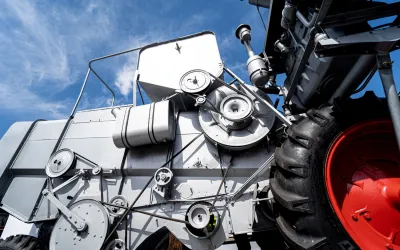
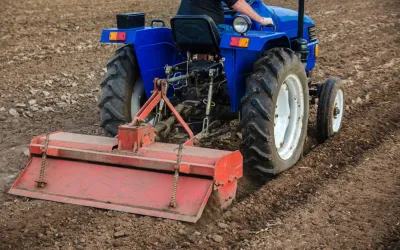
Consulting firm Mordor Intelligence forecasted a 4.5% growth in the agricultural tires market over the 2020-2025 period. Experts assessed trends and identified regions where agricultural tire sales will be most dynamic. The forecast covers sales of tires for tractors, combine harvesters and other agricultural machinery, such as sprayers and feed distributors.
Trends in the coming years
The use of machinery in agriculture has significantly increased over the years in all parts of the world, the researchers wrote in the introduction. Operation of tractors and agricultural machinery allows covering large areas in a short period of time. The stimulus for agricultural activity is continuous urbanization and increasing human population. These factors drive demand for food and increase interest in labor-saving technologies, whose foundation is mechanization of agricultural operations.
Experts also noted that:
- Developed countries have adopted mechanization of agricultural operations — soil preparation and crop harvesting — for several decades. Developing countries such as Brazil, India, and China are accelerating the adoption of tractors and combines to reduce the burden on agriculture.
- The main market need is for agricultural tires with higher load capacity, greater traction, and less impact on soil. Such agricultural rubber is suitable for harsh operating conditions and less detrimental to the fertile layer.
Current market fragmentation
According to researchers, the secondary agricultural tire market is highly fragmented and thus risky for manufacturers. It is expected that due to changes in agricultural machinery design and penetration into new, unexplored areas, tires with stronger rubber compounds will be required. Today, flotation tires and low-pressure tires for harvesting and forestry equipment are trending.
Regarding OEM tires (original equipment), farmers often refuse to purchase them. The reason is high price. For comparison: if the price of an OEM tractor tire ranges from $800 to $1500, a similar tractor tire on the secondary market costs $150 to $400. Moreover, farmers can order tires through the internet, making the purchase simple and quick.
As a result, the economic component increases sales in the secondary segment, while the OEM segment's share decreases. Today, the shares are distributed as 55-60% (secondary market) to 40-45% (OEM market).
Leading consumers and suppliers
Europe will be the main consumer of agricultural tires in 2020-2025. Meanwhile, the Asia-Pacific region will be the fastest-growing consumer. Traditionally, large sales will come from the United States and Canada, where stable demand exists for new mini tractors and small-power tractors. In the future, sales of powerful tractors and other agricultural machinery are expected to increase, enhancing the flexibility of all agricultural operations.
The main suppliers of agricultural tires in the coming years will be BKT, Bridgestone, Continental, Michelin, and Titan International.
Editorial team agronom.info
Materials are prepared by the portal's agronomists and editors. We use only trusted sources: Ukrainian agricultural universities, variety registries, open scientific publications.
Comments · 0