
What Stone to Order for a Fireplace Mantel: Material Overview
Decided to order a fireplace mantel from stone? We recommend learning more about the properties and costs of different natural minerals. We offer a brief overview of materials.
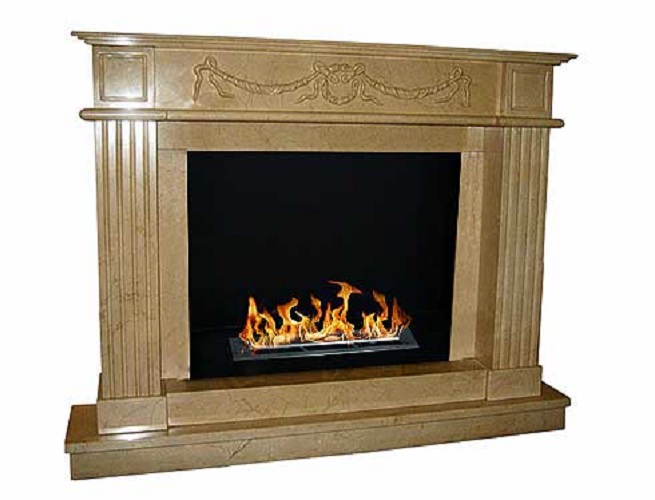
A fireplace is a symbol of home warmth and coziness. But not only that. The desire to set up a fireplace zone in an apartment speaks of prosperity and serious plans. In such a case — even if it's a decorative, not a heating device — designers recommend ordering a fireplace mantel from stone — durable, long-lasting, and easy to maintain.
Advantages of Stone Fireplace Mantels
Natural stone interacts equally well with moisture (relevant for electric fireplaces) and fire (important for wood-burning and bio-fireplaces). It absorbs heat from the fire and gradually releases it, even after the flame has gone out.
Thermal and moisture resistance of the mantel frame frees homeowners from constraints when filling the interior space. Initially, this may be a faux fireplace, later equipped with an electric heater, and eventually — a bio-fireplace. Or in any other order. Moreover, such a fireplace can even be installed outdoors: precipitation and temperature fluctuations pose no threat.
Universal stone models in design. Traditional decor blends with any setting: palace, rustic, urban. Therefore, when interior changes occur, the fireplace mantel can remain unchanged.
Types and Main Properties of Natural Stone
-
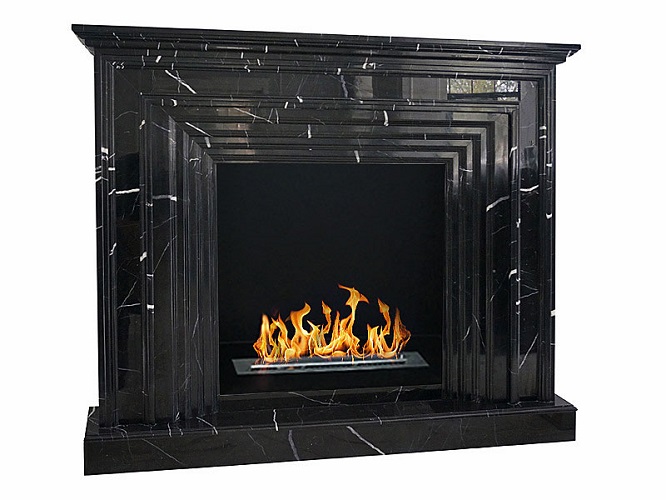
Marble. Classic in fireplace zone design. Such mantels look monumental and cost a lot. The rock can take any form as it is easily processed. Marble structures last centuries without needing restoration.
-
Granite. A harder, denser, and heavier mineral. Considered an economical alternative compared to marble, but actually depends on the type. Granite is often chosen for public and office spaces, strict, minimalist interiors.
-
Travertine. A rock with a porous structure. Compared to granite and marble, travertine is lighter but less durable. Looks "warmer" and has a diverse color palette. Has good thermal and acoustic insulation properties. Considered an affordable material as it costs less.
-
Onyx. Gaining popularity in fireplace decor. Interesting because depending on the direction of cutting — longitudinal or transverse — it gives different patterns: orderly but dynamic from parallel lines, or energetic and unpredictable from rounded and oval plateaus and craters. Due to its high light transmission, onyx mantels are often equipped with internal lighting.
-
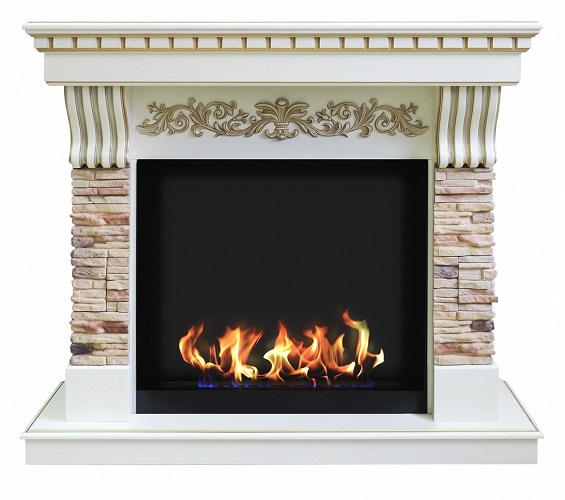
Gypsum. A pliable mineral without a distinct texture, and can be colored any shade using pigments. Therefore, gypsum is good for creating various imitations (e.g., slate), complex-shaped structures, and elements. Resistant to heat, but does not tolerate moisture, so it is unsuitable for electric fireplace decor.
Article material prepared by the website kamin-v-dome.ru
Editorial team agronom.info
Materials are prepared by the portal's agronomists and editors. We use only trusted sources: Ukrainian agricultural universities, variety registries, open scientific publications.
Related articles
How to Protect a Rattan Hanging Chair from Rain, Sun, Wind, and Precipitation? Tip from Art-Puf
Comments · 0