
Wastewater Treatment Facilities: Features of Use in Household and Industrial Settings
Wastewater treatment facilities have gained widespread use. They are employed both in households and in industry. Features of selecting wastewater treatment facilities.
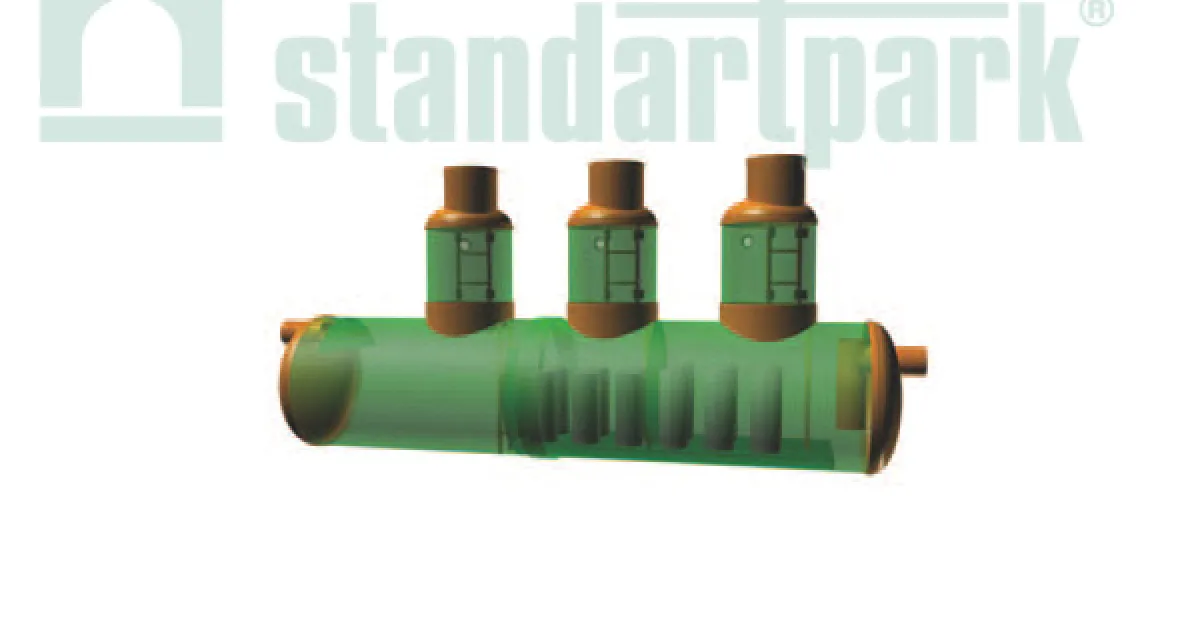
Nowadays, wastewater treatment facilities are actively used in the construction of industrial and residential buildings. They are installed not only in villages, cities, on factory grounds, but also in small cottage communities.
Since water supply is not a major issue in our country, water consumption increases with each passing moment. Along with this, there arises a serious problem related to the purification of produced and household wastewater. It is not always possible to send them to the municipal sewer system. This is mainly due to remoteness from the city, which also includes suburban homes, cottages, etc., and sometimes factories (due to exceeding permissible concentrations of certain components). In such cases, surface runoff treatment facilities become necessary.
For a dacha (country house)
 Although a simple dacha septic system offers economical use of liquid and minimal wastewater production, the environmental harm caused by such wastewater can be significant. Typically, on a dacha plot, a pit is dug into which all liquid from the bathroom, kitchen, and toilet is drained. The assumption is that all liquid in the septic pit will be filtered through the soil layer. However, such a wastewater purification method often has its drawbacks:
- contamination of soil surrounding the septic pit;
- the walls and bottom of the pit gradually silt up, halting filtration and eventually filling the pit;
- the smell spreading across the plot can indicate the exact location of the wastewater pit.
For a dacha house
For residents of private homes, it is better to purchase or construct a purification system equipped with aeration tanks. Such structures feature:
- a sedimentation or receiving tank;
- an aeration tank, where the liquid is saturated with oxygen;
- sedimentation tanks (secondary and tertiary, with either floating or submerged loading).
For industrial enterprises
 The main feature of wastewater treatment systems required for industrial enterprises is that the purification process is strictly tied to the production technology. Each enterprise has its own type of contamination, for example:
- meat processing plants discharge large amounts of fat, numerous insoluble substances, and blood into the wastewater channels;
- yeast factories discharge large volumes of fermentation liquid;
- chemical plants discharge almost all elements of the Mendeleev table into the wastewater pit.
Therefore, surface runoff systems are designed for individual facilities, as there are no universal solutions. To speed up the purification process, specialists use coagulants. These are necessary to enhance and precipitate suspended particles. Additionally, adsorbents are employed, which effectively remove various soluble components from wastewater: alkalis, salts, and acids (for pH balance). Only an individual approach allows achieving maximum efficiency and protecting the environment.
From the author: http://www.standartpark.ru/catalog/sistemy-ochistki-stochnykh-vod/
Editorial team agronom.info
Materials are prepared by the portal's agronomists and editors. We use only trusted sources: Ukrainian agricultural universities, variety registries, open scientific publications.

Comments · 0