
Parmelia: composition, properties, application, harvesting, storage
Description, composition, properties, application, harvesting, storage, preparation and much more - read on our website!
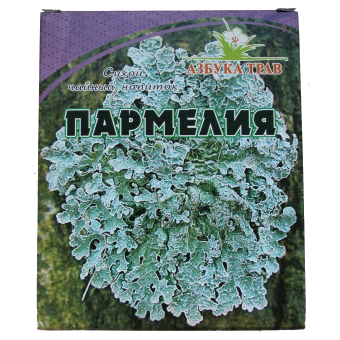
Parmelia (also known as 'prorozhennaya trava') is a lichen and represents a symbiosis of two organisms: a fungus and a green algae. Its thallus (the body of parmeliya) consists of narrowed and branched leaves of gray-green color, closely connected to each other. Its height does not exceed 5 cm, some species of the genus parmeliya can live up to 40 years. The medicinal properties of the plant were known and widely used in ancient times. However, the benefits of decoctions based on it were proven only recently. You can be convinced by ordering parmeliya from the company NaturMed, where they care for customers and offer only high-quality products.
Where to find
It grows on tree trunks, preferring coniferous trees, sometimes deciduous plants. It is slightly less common on rocks, soil, exposed wood. It likes sun and does not grow in shaded areas. It easily withstands drought, air pollution, cold and frequent rain. In Russia, up to 90 varieties of this lichen can be found in forest and steppe zones, especially often in the south and southeast.
Chemical composition
The medicinal properties of parmeliya are due to its chemical composition, during research the following substances were found:
- usnic acid (the strongest natural antibiotic);
- complex carbohydrates;
- polysaccharides — lichenin (lichen starch), evnin and isolichenin;
- proteins;
- fats;
- colorants;
- ash;
- potassium, phosphorus, calcium;
- ascorbic acid.
Medicinal properties
The properties of parmeliya are widely used in traditional and folk medicine, it helps:
- to treat colds;
- to eliminate cough;
- to get rid of colitis;
- to improve the condition of the heart muscle and vessels;
- to treat burns or frostbite;
- to boost immunity;
- to enrich the body with beneficial substances;
- to help with acute and chronic bacterial infections;
- to improve the condition of the urinary and reproductive system;
- to speed up recovery after severe illnesses;
- to remove toxins and waste.
Application
The bactericidal, anti-inflammatory and reparative properties of the lichen allow it to be successfully used for many diseases. Indications for using parmeliya include the following pathologies:
- diarrhea;
- chronic cough;
- purulent wounds and ulcers on the skin that are difficult to heal;
- inflammation of the intestine;
- flu and colds;
- toxic dyspepsia;
- tuberculosis;
- skin rashes and irritations;
- immunodeficiency states;
- hemorrhoids and bacterial cystitis (a solution is prepared for douching);
- recovery after surgery or serious illness;
- diseases of the cardiovascular system.
It should be understood that this remedy should be used as an auxiliary, it cannot fully replace standard therapy, but it is quite capable of speeding up the healing process.

Harvesting and storage
It is important to choose special places for collecting the plant. Like all lichens, it has the ability to absorb moisture along with all toxins and heavy metals dissolved in it. Therefore, it is not recommended to use raw material collected on the territory of large cities, landfills, large roads with constant traffic.
The thallus of parmeliya is collected in spring, when warm weather is established. It is carefully cut with a knife and immediately cleaned of wood and debris. This is usually done at the end of April or the beginning of May, when the plant contains the maximum amount of beneficial substances.
After collection, the raw material is dried in the sun on an open space or in a well-ventilated room. This process usually takes 3 days. The readiness of the raw material for packaging is determined by the smell. When properly dried, its aroma no longer remains sharp. After drying, it can be stored in jars, bags or boxes. When properly stored, it does not lose its medicinal properties for 3-4 years.
Side effects and contraindications
Usually, remedies with parmeliya do not cause harm if prepared and consumed correctly. The use of decoctions is contraindicated in the following cases:
- individual intolerance;
- polyvalent allergy;
- pregnancy and breastfeeding;
- age under 6 years.
Prolonged use or overdose may cause nausea or vomiting, as intoxication develops. In this case, treatment should be discontinued and a doctor should be consulted.
Preparation of remedies
To achieve the desired effect in treating various diseases, it is necessary to know the secrets of preparing parmeliya:
- For tuberculosis, take 3 tablespoons of ground thallus, pour half a liter of milk, boil and simmer for another 15 minutes on low heat. After straining, use the milk decoction in one-third of a cup, three times a day.
- For compresses and washes, take 5 tablespoons of raw material and 0.5 liters of water, bring the mixture to a boil and simmer for 20 minutes. Let it cool completely, strain and squeeze. Use only as an external remedy.
- For cough, 1 tablespoon of parmeliya is poured with 1 liter of water and brought to a boil on a water bath. Then simmer the mixture for 1.5-2 hours. After straining the residue, drink the liquid warm in one-third of a cup 30 minutes before meals. Store in the refrigerator, slightly warm before use.
- For improving intestinal and stomach function, diarrhea, and to improve appetite, take 3 tablespoons of raw material and boil in 300 ml of water for 10 minutes. Then let it steep for another 2 hours, strain and take 2 tablespoons up to 4 times a day, on an empty stomach. The duration of such treatment should not exceed one month.
Any decoction made from parmeliya has a bitter taste, slightly burning, and has a brown color.
Use in children
Parmeliya decoction can be used in children over 6 years old for cough and colds. It helps strengthen the body's defenses, eases mucus expulsion and speeds up recovery. For children up to 14 years old, take a teaspoon instead of a tablespoon to prepare the decoction; you can also add fennel or anise (in seeds).
For older children, the recommended dosage and preparation of the decoction are the same as for adults. After the first intake of the remedy, carefully observe the child's reaction. If a rash or skin irritation appears shortly afterward, this indicates an allergic reaction, after which the remedy should be discontinued.
Editorial team agronom.info
Materials are prepared by the portal's agronomists and editors. We use only trusted sources: Ukrainian agricultural universities, variety registries, open scientific publications.
Comments · 5