
Greenhouse for Cucumbers: How to Organize
Cucumbers — a crop that is difficult to grow in a temperate climate. Temperature fluctuations, excessive rainfall, and strong winds can completely destroy the harvest. A properly arranged greenhouse allows you to obtain early fruits without much effort. Such a…
Cucumbers — a crop that is difficult to grow in a temperate climate. Temperature fluctuations, excessive rainfall, and strong winds can completely destroy the harvest. A properly arranged greenhouse allows you to obtain early fruits without much effort. Such a greenhouse not only accelerates growth but also protects the plant from insect and disease damage.
Main Types of Greenhouses for Cucumbers
The standard height of the structure required for growing cucumbers is 1.5 meters. A typical setup does not have an additional irrigation station or lighting equipment. Cultivation is carried out using resources of the surrounding environment. Depending on the type of construction, greenhouses are divided into two groups:
-
Butterfly.
-
Plastic (temporary).
These installations can be stationary or portable. You can organize the structure yourself using materials left over from construction. For assembly, you will need to purchase a quality covering material. It can be spunbond (agrofiber) or standard plastic film.
Temporary Greenhouse: Construction Features
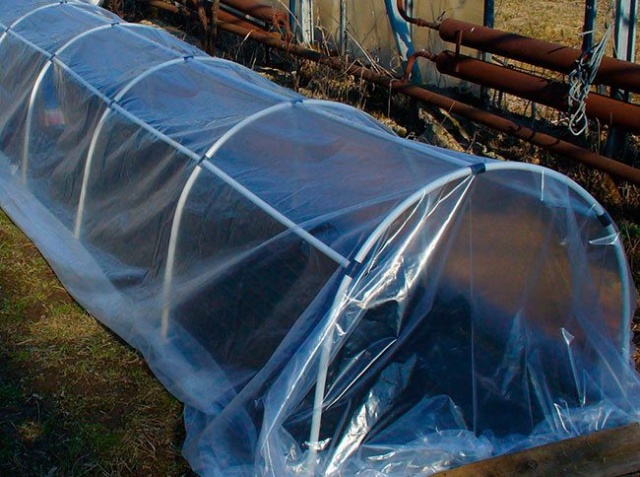
The installation is fixed and arranged directly on the bed where cucumbers are planted. Flexible rods or plastic, steel arches are used for its formation. The top covering is a lightweight material. This can be plastic film or agrofiber. Modern gardeners avoid using polyethylene coverings, as they do not allow air to pass through and form condensation. Agrofiber does not have this issue.
-
Such a greenhouse will protect young seedlings from wind, hail, and heavy rain.
-
It withstands cold snaps.
The only drawback is its stability. The structure will break if it has a wooden base. To ensure the structure lasts longer, it is better to use metal rods.
-
Gardeners’ recommendation: install such a greenhouse on an open, sunny area. Orientation — from north to south.
A temporary greenhouse visually resembles an arch or tunnel. Under such protection, the plant is fully shielded from environmental influences. Solar heat and moisture under cover form an optimal microclimate required for normal cucumber growth.
Butterfly: Construction Scheme and Features
Such a greenhouse is sturdy and long-lasting. It can remain assembled after the early cucumber harvest. It features a unique double-sloped design, where roof panels can be opened. This structure simplifies watering and harvesting. The cover can be opened for ventilation and additional watering by rain. The butterfly greenhouse is convenient and practical to use. You can even construct it with minimal woodworking skills.
Such an installation can be assembled from old window frames. You can also purchase it. In stores, items with polycarbonate profiles are available. If you plan to save money and build the cover yourself, you will need to prepare the following components:
-
Wooden frame from boards. Make sure to treat the wooden base with anti-rot protection.
-
Roof panels. These can be old window frames.
For securing, use fasteners or any other mounting hardware. Schematics of the frame and roof:
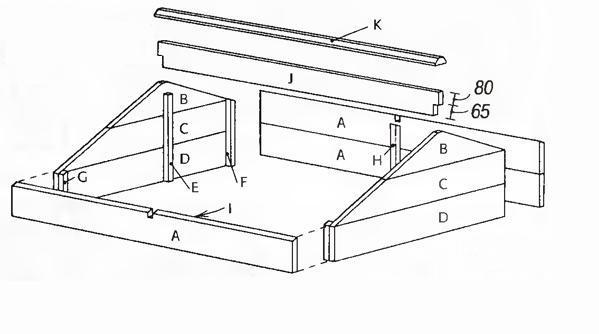

During assembly, take into account the size of the area and the characteristics of cucumber seedling spacing. This will allow you to construct a greenhouse that will enable you to harvest crops as early as late spring.
Editorial team agronom.info
Materials are prepared by the portal's agronomists and editors. We use only trusted sources: Ukrainian agricultural universities, variety registries, open scientific publications.

Comments · 0