
Selection of Equipment for Manufacturing Closed-Type Facade Metal Cassettes
Equipment required for producing closed-type facade cassettes. Brief description of each machine and technological processes carried out on them.
One option for constructing ventilated facade systems is the use of metal cassette panels mounted on a load-bearing frame. The popularity of this method is due to the relatively low cost of materials used, as well as the possibility of simple and rapid installation.
Most often, facade structures are made using cassettes from galvanized steel, painted with powder coating or covered with colored polymer film. This is done to provide better corrosion resistance and improved appearance. The main advantages of panels of this type made from such material include:
- good rigidity, ensured by metal thickness of 0.7-1.2 mm, allowing them to withstand high wind loads;
- low financial costs for quality facade finishing;
- fast and simple installation providing a strong and reliable structure;
- wide color range of products, enabling successful implementation of most design solutions;
- long service life without requiring maintenance.
A distinctive feature of closed-type metal cassettes is the presence of a specially bent edge, which allows for interlocking between adjacent panels and ensures a tight, continuous covering. This type of facade assembly is slightly more complex, but its quality and reliability are considered higher.
An important aspect in manufacturing facade panels is the correct selection of equipment, use of quality materials, and adherence to production technology.
Equipment Set for Manufacturing Closed-Type Cassettes
The minimum equipment set for producing panels includes:
- guillotine shears or cutting blade included in a manual press brake kit;
- corner punching press with a set of required dies;
- press brake equipment.
If rolled sheet metal is used in production, a mechanism for unloading and moving it, as well as a stand for gradual unwinding during cutting of blanks, is required. To create a quality coating, a painting department with equipment for powder coating or a section for applying colored polymer coatings must be organized.
You can learn more about the process of manufacturing closed-type facade cassettes and each production stage here.

Guillotine Shears and Cutting Blades
Many manual press brakes come with roller cutting blades. They allow for precise cutting of metal up to 1.0 mm thick. However, it should be noted that such devices can be effectively used only for producing small batches or individual non-standard parts under construction site conditions.
For industrial production of closed-type facade cassettes, guillotine shears are necessary. They differ by drive type, which can be mechanical, electric, or hydraulic.
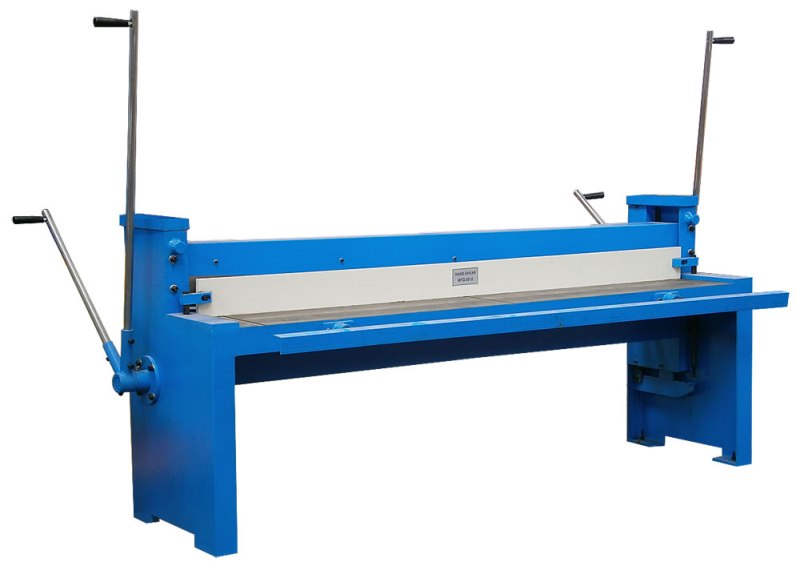
To ensure high productivity, the shears must include:
- sheet clamps for secure holding during cutting;
- rear and front stops;
- additional support table;
- safe operation and protection against possible injury;
- measuring scale;
To protect the surface of painted sheets from mechanical damage, the working table and clamps should be polished or have a polymer coating. The best metal-cutting machines have hydraulic drive. They provide smoother movement of the falling blade, resulting in higher cutting quality.
Corner Punching Press with Die Set
After cutting, corners must be punched out in blanks to allow bending of side walls and oval holes for mounting fasteners. This work is performed using a combined punching press, to which special dies of appropriate shape are installed for various operations.
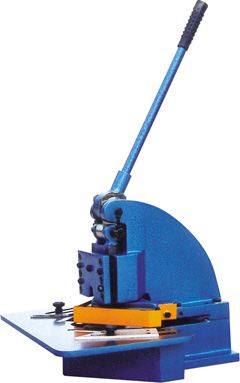
For each specific type of product, dimensions, and geometric shape, a specific set of press dies is required. The press can have either electromechanical or hydraulic drive.
Equipment for Metal Bending
The final stage of manufacturing closed-type facade cassettes is performed on a press brake. Like guillotine shears, press brakes can have mechanical, electric, or hydraulic drive. Additionally, they are divided by the number of installed working elements into:
- single-segment with one bending beam;
- two-segment with clamping and bending traverses;
- three-segment with clamping, bending, and main working table beam.
For manufacturing closed-type facade panels, the most productive equipment is three-segment machines with hydraulic drive. They provide high productivity and quality of products with complex configurations and various sizes.

The press brake must have clamps on the clamping beam and stops to securely hold the blank in the required position. To prevent mechanical damage to the material and ensure the necessary bending radius, adjustable traverse positioning is required.
Technical specifications of the press brake are determined by the following parameters:
- maximum allowable thickness of processed material depending on its type;
- working length of the machine;
- maximum bending angle;
- presence of additional mechanisms and fixtures.
In conclusion
When selecting technological equipment for manufacturing closed-type facade cassettes, determine expected production volumes, realistic payback periods for equipment and maintenance of production area, which depend on the actual market for sales.
Setting up a workshop or shop for manufacturing metal facade panels becomes profitable when mounting is done by your own forces. For small-scale projects, it is better to purchase ready-made products.
Editorial team agronom.info
Materials are prepared by the portal's agronomists and editors. We use only trusted sources: Ukrainian agricultural universities, variety registries, open scientific publications.
Related articles
LSTC Hangars: A Modern Solution for Rapidly Erected Buildings
Estimate 2026: How much does a complete turnkey roof replacement for a private house really cost?
Comments · 0