
Boosting Crop Yield with Drip Irrigation
Growing cucumbers, potatoes, raspberries, lettuce, and other crops often leads to disappointment. Many farmers or garden owners have repeatedly encountered situations where summer drought completely or partially destroys the entire harvest. To prevent such outcomes, it is necessary to prepare…
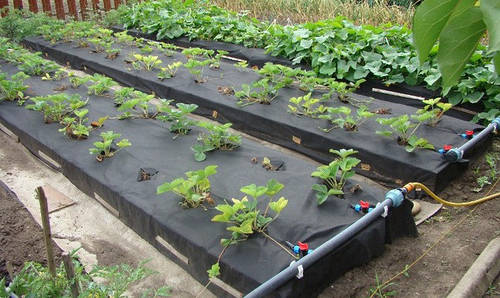
Growing cucumbers, potatoes, raspberries, lettuce, and other crops often leads to disappointment. Many farmers or garden owners have repeatedly encountered situations where summer drought completely or partially destroys the entire harvest. To prevent such outcomes, it is necessary to prepare in advance for quality and timely soil watering.
Why is drip irrigation needed?
Drip or portioned irrigation is an economical alternative to standard watering. You won’t need to carry buckets of water or use hoses, the use of which affects utility bills.
The secret of the drip irrigation system is that all liquid is delivered directly to the plant's root zone (the hole). Water is not wasted on inter-rows and does not reach leaves, which is the main cause of burns, for example, on cucumbers.

Advantages of the system
- Regulation of water and liquid fertilizer delivery. They reach the root zone at a specific rate and quantity you set.
- No wastage. The irrigation resource is delivered precisely in portions, doses, and to a clearly specified location. It is not wasted on inter-row irrigation, yet the soil at the planting site remains consistently moist.
- Targeted delivery. This method increases yield because all nutrients reach the plant.
- Maintains normal aeration of the topsoil layer. The soil remains loose, does not dry out. Thanks to this, air permeability improves.
How does drip irrigation affect yield?
First of all, planted crops receive sufficient moisture even in the driest seasons. The water consumption in this case is minimal. Portioned delivery directly to the root zone promotes rapid absorption. Weeds do not appear in inter-rows, which would otherwise take part of the nutrients for themselves. Thanks to this, labor costs for bed maintenance are reduced.

Targeted water delivery protects young leaves and seedlings from burns. In case of rain or a wet summer, you can always turn off the system or reduce the intensity of irrigation. Modern complexes are equipped with a timer that regulates the duration of watering. You can also purchase rain sensors. In case of rain, the system automatically shuts off.
The ready-made complex can be used for soil fertilization. Fertilizers can be sufficiently diluted in a storage tank. Note that it is better to use soluble or even liquid fertilizer, which will pass through the filtration system.
Which crops can use this technology?
Drip irrigation is suitable for all crops sensitive to moisture or suffering from its deficiency. Successfully implemented technology increases yield by 40-70%. This method is actively used during cultivation of potatoes, cucumbers, tomatoes, raspberries, strawberries, greens, beets, onions, cabbage.

Organizing the complex does not require significant labor or financial costs. As a storage tank, you can use a standard large plastic tank or an old cistern. If there is another water source on the plot, you can utilize it (water supply line, lake, pond, river). However, in this case, install a quality filtration system to prevent large particles of contamination from entering the system.
The placement of the complex reduces water consumption by several times. If previously one bucket of liquid was enough for just a couple of holes, portioned delivery will moisten a whole row with the same amount.
Editorial team agronom.info
Materials are prepared by the portal's agronomists and editors. We use only trusted sources: Ukrainian agricultural universities, variety registries, open scientific publications.
Comments · 0