
Industrial Construction Using Sandwich Panels
Construction using sandwich panels is gaining wider popularity. This is not surprising, as this material possesses excellent properties.

A sandwich panel is a type of construction material consisting of two sheets of rigid metal. They are separated by an insulating layer, which may be mineral wool, polystyrene, or polyurethane foam. Thanks to their use, it is possible to achieve higher levels of thermal insulation in rooms. This material, sandwich panels, are widely used for constructing residential and industrial buildings. This technology allows creating buildings even according to the most unconventional designs. In this regard, all restrictions are removed. Some developers prefer originality, while others focus on projects that have proven successful in the past.
Main Features and Advantages of Sandwich Panels
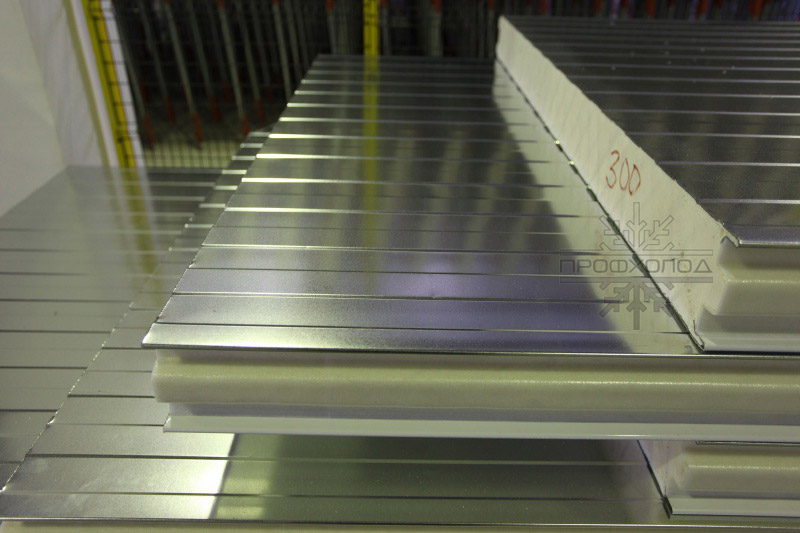 The advantages of using sandwich panels in industrial construction are as follows:
- speed of construction (a ready building can be obtained in just two weeks);
- possibility to carry out construction and installation work regardless of weather conditions and season (materials are completely insensitive to temperature fluctuations);
- the structure is not prone to deformation, so after assembly, work on interior finishing can begin immediately;
- high sound and thermal insulation;
- structural strength;
- for industrial buildings, there is no need to reinforce the foundation;
- if necessary, you can disassemble the building at any time and relocate it to another location.
Considering all the advantages of the material, one can say that technical facilities and industrial buildings have found in it an ideal combination of quality and functionality. Sandwich panels are also in demand in the military sector for constructing facilities for crew service using the shift method.
Assembly of Structures
By following the stages of construction in sequence, you can quickly obtain a quality and reliable industrial space. Specialists distinguish:
- First stage, which involves laying the foundation. It may be slab, shallow strip, strip-pile, or screw-pile. Regarding the last option, it has clear advantages. Among the main ones — the ability to work under any weather conditions and complete the process in a short time.
- Second stage involves mounting the building directly. On the foundation, builders attach the perimeter ring (it is a treated wood beam with antiseptic) using anchor bolts. Next, to connect sheets together, they use 4mm boards serving as a frame. Walls are installed at a right angle using self-tapping screws. Joints of the building must be treated with mounting foam. Here, doors and windows (if provided in the project) are installed.
- Roofing equipment installation. This is done using the most common methods.
- Installation of engineering networks. In any industrial building, there must be everything necessary: ventilation and other utilities.
You can choose sandwich panels for constructing various structures on the manufacturer's website: http://www.profpanel.ru/
Editorial team agronom.info
Materials are prepared by the portal's agronomists and editors. We use only trusted sources: Ukrainian agricultural universities, variety registries, open scientific publications.
Related articles
LSTC Hangars: A Modern Solution for Rapidly Erected Buildings
Estimate 2026: How much does a complete turnkey roof replacement for a private house really cost?
Comments · 0