
The Most Popular Gladiolus Varieties of 2018
Flowers worthy of admiration at any time of the year — these are gladiolus. If they were previously cultivated mostly with white, yellow, and red petals, today the market offers a vast variety of gladiolus varieties in different shades and…
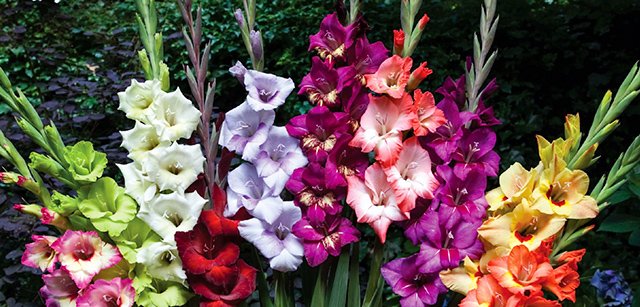
Flowers worthy of admiration at any time of the year — these are gladiolus. If they were previously cultivated mostly with white, yellow, and red petals, today the market offers a vast variety of gladiolus varieties in different shades and sizes. We believe that even the most picky gardener can find among them the variety that suits him. And which of the existing ones were the most popular in the 2018 season, we found thanks to the Matla Flowers gladiolus catalog https://matla-flowers.com.ua/bulbs/gladiolus/
Gladiolus Oscar — a large-flowered novelty of 2018
This lush-flowering variety is distinguished by its crimson velvet petals of sword-shaped form. They are so bright that they seem to glow red, standing out against other flowers in the garden. The diameter of each inflorescence is 10-12 cm. The stem height — 90-150 cm.
Planting gladiolus Oscar is recommended early in spring, after it becomes clear that there will be no more frosts. They should be planted in groups.
Depth and interval for planting bulbous tubers — 10-15 cm. They prefer sunny spots and well-drained soil. They bloom from July to September. Since these are warm-loving plants, they should be dug up for winter.
Gladiolus Nori — bright purple petals with a snowy tint
If you want to add an unusual gladiolus variety to your flowerbed, pay attention to Nori. These are bright pleated petals with a white vein. The height of their stem reaches 110-130 cm. The diameter of the inflorescence — 30-40 cm. Gardeners recommend planting gladiolus Nori in May and April in pre-drained soil at a depth of 10-15 cm. They grow well both in pots and in greenhouses. In windy weather, they should be tied to a support for stability. They bloom in August and September. After the period of propagation, they should be dug up until the next season.
Gladiolus Jester — a worthy competitor to yellow tulips, lilies, and orchids
This variety is distinguished by its rich yellow color with a dark red spot on the petals. It looks stunning in bouquets. The height of its stem — 100 cm. Plant it in spring in mulched and well-drained soil. It blooms in July and August. Gladiolus Jester loves being watered abundantly, using micro-fertilizers, regularly loosening the soil, and weeding.
Gladiolus Priscilla — one of the most beautiful and delicate varieties
Just one stem of this flower is capable of creating a beautiful and lush bouquet. Its pleated white-pink petals with a dark pink edge begin to bloom in July and finish before the arrival of autumn frosts. Plant gladiolus Priscilla in April. First, you need to clean the bulb from outer scales and place it in a box under diffused light. As soon as the sprouts reach 3-5 cm, plant the bulb in an open area with plenty of sunlight. It is very important that there are no weeds in the soil. It needs to be drained and mineral fertilizers added.
Gladiolus Buggy — a magical white-pink variety
To create a festive mood every day, plant gladiolus Buggy in your garden. In European countries, it is called "magical." It has very delicate petals: white on the outside, yellow inside. The stem height — 110-120 cm. Up to seven flowers of 15 cm diameter bloom simultaneously on it. One inflorescence can have up to 22 buds.
Since flowering begins in July and ends in September, this variety should be planted in groups in sufficiently warmed soil in mid-May. The planting depth — up to 15 cm. Distance between bulbs — 15-20 cm. The planting site should be sunny. Bulbs should be dug up for winter.
Gladiolus Green Star — a green-flowered variety with butterfly-type flowers
This is one of the rarest varieties in terms of petal color. Its flowers always look unusual and fresh. Gladiolus Green Star is distinguished by its low requirement for planting location, soil conditions, and resistance to diseases. It prefers nutrient-rich and moisture-retentive soil with a substrate, but without excess moisture. Blooms from July to September. Forms dense green buds that transform into flowers up to 15 cm in diameter. Stem height — 120-150 cm. Up to 9 buds per inflorescence.
Gladiolus Ben Venuto — soft orange petals with a peach tint
This variety is mainly used for group planting in greenhouses or for landscaping. It looks very delicate and romantic in bouquets. It has a pleasant and subtle fragrance. Plant gladiolus Ben Venuto in mid-April to late May. It prefers light soils:
- chernozem,
- loamy,
- sandy.
The location should be well-lit and protected from wind. This not only promotes vigorous blooming but also prevents disease development. The flowers are 15-18 cm in diameter, inflorescences — 40 cm. Stem height — up to 130 cm.
Gladiolus Pr Margaret Rose — a royal large-flowered variety
Large yellow-orange flowers have a non-standard shape — intermediate between a circle and a triangle. The lower petals are yellow with a bright orange edge. The inflorescence is elongated, up to 50 cm in diameter. Stem height — 90-110 cm. Pr Margaret Rose blooms for three weeks in July. Looks beautiful in flowerbeds and in vases.
Gladiolus Purple Flora — the best velvety gladiolus
A flower with a very rich purple hue and dark spots. Stem height — 120 cm. Bell-shaped flowers with a diameter of 11-14 cm. Each inflorescence consists of six fused bases of petals of different shapes and sizes. Plant it in late April to May at a depth of 10 cm. Blooms 6-8 flowers simultaneously in September. This variety does not impose special requirements on soil. It prefers humus with a slightly alkaline pH. The growing site should be sunny and protected from wind. Supports for stems should be provided. Bulbs should be dug up and stored dry at a temperature of 5 °C for winter.
If you want to have a bright and multi-colored garden and create incredibly beautiful gladiolus bouquets, it is worth buying and planting all the above-mentioned varieties.
Editorial team agronom.info
Materials are prepared by the portal's agronomists and editors. We use only trusted sources: Ukrainian agricultural universities, variety registries, open scientific publications.

Comments · 0