
Types of Grease Traps for Sewerage
A grease trap helps prevent sewer pipes from clogging by separating liquid from grease and oils. Required for industrial facilities and food service establishments.
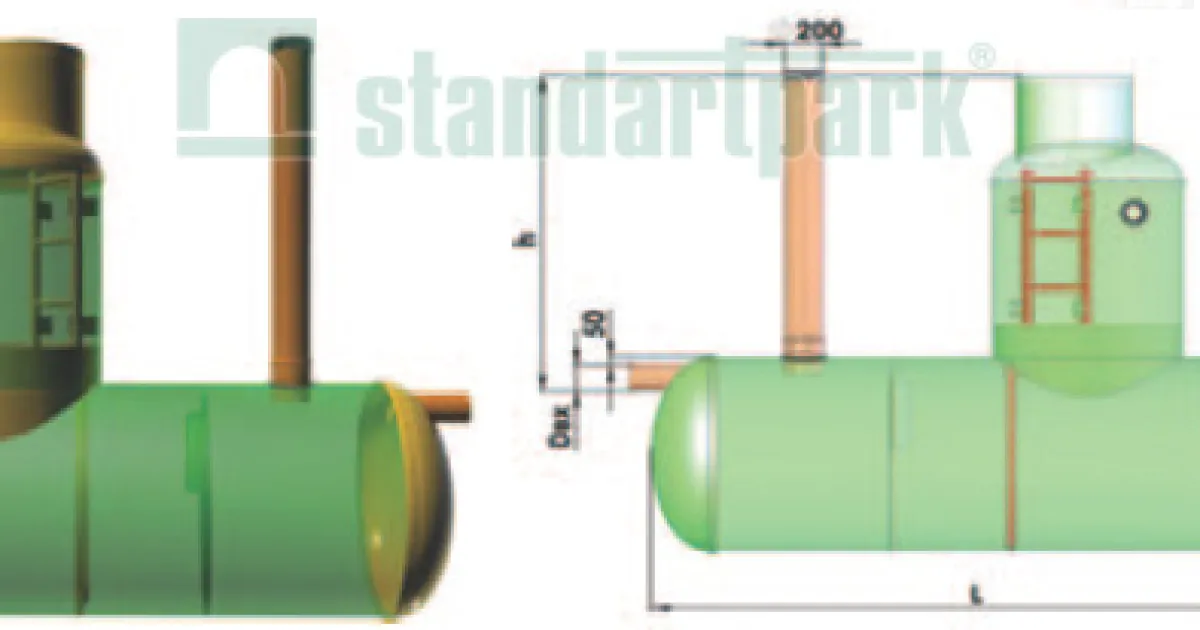
What is a grease trap for sewerage? It is a device that prevents grease and oil from entering pipes, working by separating them from liquid, as these substances have a lower specific gravity than water, so they float to the surface, allowing them to be retained in special "traps".
Grease traps (separators) must be installed at industrial facilities and food service establishments. In households, they are typically used when there is expected to be a large volume of wastewater. This equipment is necessary to prevent grease buildup in the sewer system, which could disrupt its operation.
Differences in grease traps depending on the material of construction
Manufacturers produce 3 types of models:
- Plastic.
- FRP (Fiberglass Reinforced Plastic).
- Stainless steel.

The first type is most often installed in kitchens (including restaurants and canteens). Such grease traps last up to 30 years, are eco-friendly, easy to maintain. They can be quickly cleaned as needed, using common household grease removal agents. Among their advantages is that plastic models can be manufactured to custom specifications, i.e., have parameters required by the customer.
FRP is used for producing industrial separators, as it is highly resistant to aggressive chemicals. Such structures can be installed both indoors and outdoors, as they withstand any atmospheric conditions. Additional advantages include low weight, strength, and ease of cleaning.
Stainless steel is used for manufacturing grease traps for large industrial facilities. Such models are the most expensive, but they have the best technical characteristics:
- They last a long time,
- They are resistant to corrosion,
- They are hygienic,
- They are aesthetically pleasing,
- They do not rust.
When purchasing, pay attention to ensuring the product is made of stainless steel, not galvanized steel, which is cheaper but does not possess most of the above-mentioned advantages.
What depends on the type of installation?
There are two main categories of grease traps: for indoor and outdoor installation.
If you require a model to be installed indoors, you may choose a model for installation under a sink, in a basement, or in a separate room. They can have different capacities and be designed for connection to one or multiple sinks, dishwashers, or washing machines. Typically, plastic models are used for such cases.
 For outdoor models, it is better to choose steel or FRP ones, as they can withstand not only weather extremes but also soil pressure (usually, during installation, the structure is buried in the ground). Installation is better entrusted to professionals who will carry out earthworks or pour concrete if necessary.
Cleaning methods
It can be done manually or using a pump. In the first case, you will have to monitor the accumulation of grease and remove it manually. In the second case, you will need to call specialized equipment, which will start a pump to remove contaminants from an industrial or outdoor grease trap.
Editorial team agronom.info
Materials are prepared by the portal's agronomists and editors. We use only trusted sources: Ukrainian agricultural universities, variety registries, open scientific publications.
Related articles

LSTC Hangars: A Modern Solution for Rapidly Erected Buildings

Estimate 2026: How much does a complete turnkey roof replacement for a private house really cost?
Comments · 0