Pink Cedar
Acrocarpus fraxinifolius Wight ex Arn.
Description
Acrocarpus fraxinifolius, commonly known as Pink Cedar, is a large, fast-growing deciduous tree belonging to the Fabaceae family. It is highly valued in tropical forestry for its straight, clear bole and its capacity to reach significant heights in a relatively short period, making it a key species for timber plantations.
The tree is native to the tropical regions of South and Southeast Asia, including India, Indonesia, and Myanmar. Due to its impressive growth rate and environmental adaptability, it has been introduced to many tropical regions in Africa and Latin America, where it has become a staple for various agroforestry projects.
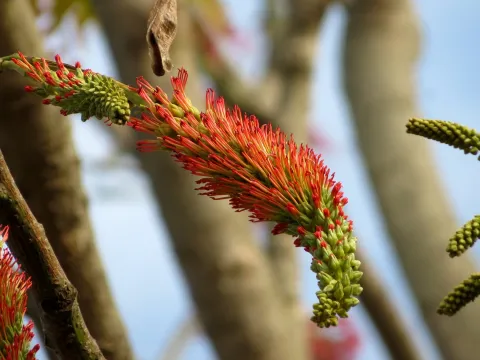
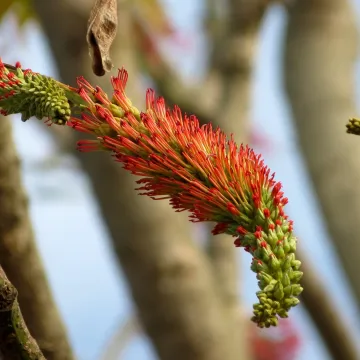
Botanically, the species is recognized by its compound, pinnate leaves and distinctive flowering behavior where blooms appear before the emergence of new foliage. A significant biological advantage of this tree is its ability to form symbiotic relationships with nitrogen-fixing bacteria, which contributes to the nutrient enrichment of the soil.
For successful cultivation, Pink Cedar requires deep, fertile, well-drained soils and a humid tropical climate. Good agricultural practice involves selecting sites with adequate drainage to prevent waterlogging, as the species does not thrive in stagnant soil conditions and remains vulnerable to frost in higher altitudes or arid zones.
The economic value of Acrocarpus fraxinifolius lies primarily in its timber, which is durable and highly sought after for furniture manufacturing, light construction, and veneer production. Additionally, because of its open canopy, it is frequently used to provide light shade for shade-loving commercial crops like coffee and tea.
- Rapid biomass accumulation
- Nitrogen-fixing root system
- High-quality commercial timber
- Useful as a shade tree in plantations
- Excellent suitability for reforestation efforts
Photo gallery