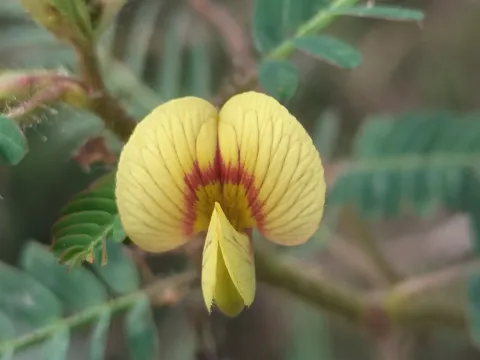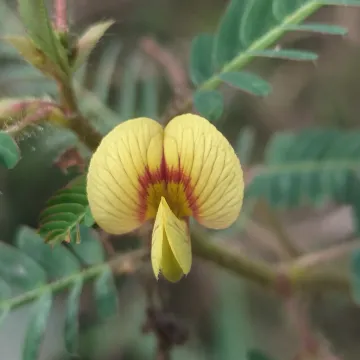
Indian jointvetch
Aeschynomene indica L.
Description
Indian jointvetch (Aeschynomene indica L.) is an annual leguminous plant belonging to the Fabaceae family. Known for its remarkable tolerance to waterlogged environments, it is a highly valued plant in agricultural systems where flood-prone soils are common.
Originating from tropical Asia, it has successfully spread across various tropical and subtropical regions globally. It is frequently observed growing in wetlands, paddy fields, and ditches, where it thrives in conditions that would inhibit the growth of most other crop varieties.
Botanically, this species is characterized by its pinnate leaves and distinctive jointed pods. A significant feature of the plant is its ability to produce stem nodules in addition to root nodules, which enhances its capacity for biological nitrogen fixation in diverse soil conditions.
In terms of agricultural requirements, the crop prefers heavy, moist soils and a warm climate. It is relatively easy to cultivate, requiring minimal intervention once established. Due to its nitrogen-fixing capabilities, it significantly reduces the need for synthetic fertilizers in subsequent crops.
Common agricultural applications include:
- Use as a high-quality green manure to enrich soil fertility.
- Utilization as a protein-rich forage source for livestock.
- Application in phytoremediation and soil conservation on degraded wetlands.
The plant is susceptible to certain pests, such as leaf-feeding insects, and fungal pathogens that can develop during high-humidity periods. Proper field management, including controlled irrigation and density monitoring, is essential to maintain plant health and biomass yields throughout the growing season.
Photo gallery