Aloe haworthia
Aloe aristata x Haworthia limifolia
Description
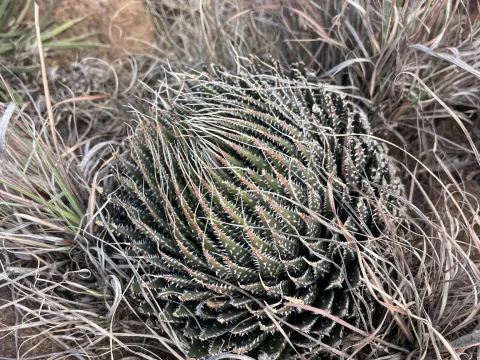
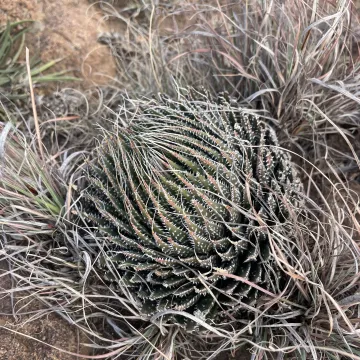
Aloe haworthia is a complex intergeneric hybrid derived from the cross-breeding of Aloe aristata and Haworthia limifolia, both belonging to the Asphodelaceae family. This ornamental succulent is widely recognized for its sculptural appearance, which blends the robust nature of the Aloe genus with the intricate leaf patterns typical of the Haworthia genus.
The ancestral origins of this hybrid lie in the arid regions of Southern Africa. Due to its genetic background, the plant has developed high physiological tolerance to intense solar radiation and prolonged drought, making it an excellent candidate for cultivation in controlled environments where water management is crucial for survival.
Botanically, the plant presents as a dense, rosette-forming succulent. The leaves are thick and fleshy, often featuring distinctive ridges or tubercles derived from Haworthia limifolia, and fine, marginal teeth inherited from Aloe aristata. The plant possesses a shallow, fibrous root system that necessitates containers with adequate depth and superior drainage properties.
Regarding agrotechnical requirements, the plant thrives in well-aerated, inorganic-heavy substrate mixes, such as cactus potting soil amended with pumice or perlite. Temperature management is vital, with a preference for warm days (22–28°C) and significantly cooler nights. Lighting must be bright but filtered, as direct midday sun in artificial indoor conditions can damage the leaf cuticle and cause chlorosis.
The primary use of this plant is in the ornamental horticulture sector, particularly for indoor display and specialized succulent collections. It is not an agricultural food crop. Management of pests, primarily mealybugs, and fungal pathogens caused by improper moisture levels is the cornerstone of professional plant care for this hybrid, ensuring longevity and optimal aesthetic development.
- Ensure soil drains completely between watering intervals.
- Apply specialized succulent fertilizer during the growth season.
- Use unglazed terracotta pots to improve moisture evaporation.
- Monitor closely for sap-sucking insects in the leaf axils.
Photo gallery