
Description
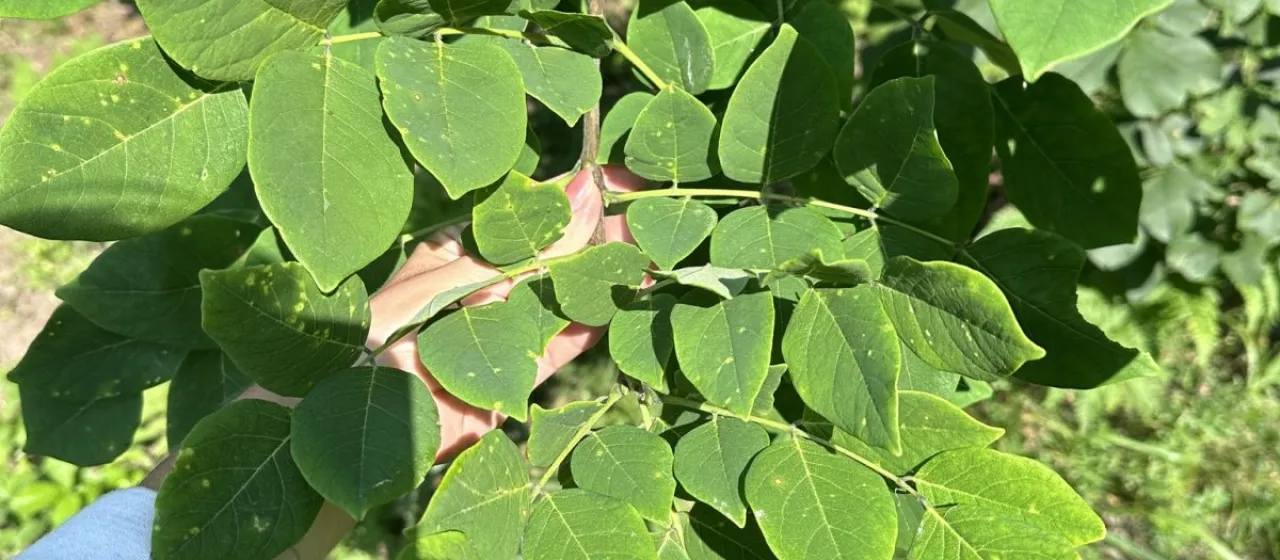
Amur maackia (лат. Maackia amurensis) is a hardy deciduous tree belonging to the Fabaceae (Legume) family. Often characterized by its bronze-tinted peeling bark and compound, dark-green leaves, it reaches heights of 15–20 meters in the wild. As a nitrogen-fixing species, it plays a vital role in soil enrichment, making it an excellent candidate for ecological reforestation projects.
Originating from the regions of the Russian Far East, China, and Korea, the Amur maackia is adapted to temperate climates with cold winters and relatively humid summers. It thrives in various environments, including river valleys and mountain slopes, showcasing strong resilience against harsh weather conditions and proving its adaptability to different ecological niches.
Botanically, the species is defined by its racemes of white to creamy-green pea-like flowers that bloom in mid-summer. These flowers provide a significant nectar source at a time when most other woody plants have finished their cycle. The fruit, a flattened brown pod containing several seeds, remains on the tree throughout autumn, providing interest and winter food for wildlife.
Cultivation requirements favor well-drained, fertile, and slightly acidic to neutral soils. The tree prefers full sun to light shade and is notably drought-tolerant once established. Proper maintenance includes periodic mulching to retain moisture and structural pruning during the dormant season to maintain an attractive shape, though the tree naturally develops a balanced, rounded crown.
Economic and practical applications include:
- Landscape architecture, where it is valued for its hardiness against urban pollution and pests.
- Timber production, as the wood is exceptionally durable, rot-resistant, and suitable for high-quality furniture.
- Pharmaceutical industry, as the plant contains bioactive compounds such as isoflavones, studied for potential antioxidant and immune-modulating effects.
Regarding plant health, the Amur maackia is relatively resistant to common pests and diseases compared to other ornamental trees. Occasional issues may arise from soil-borne pathogens if drainage is inadequate. Generally, providing sufficient spacing and avoiding excessive moisture in the root zone effectively prevents common fungal infections, ensuring a long-lasting and healthy tree.