Anoda parviflora
Anoda parviflora
Description
Anoda parviflora is an annual herbaceous plant belonging to the Malvaceae family. Although often categorized as a weed in some environments, its biological potential and resilience make it a subject of interest for agricultural research and niche ornamental cultivation.
Originating from the Americas, specifically Mexico and the southwestern United States, Anoda parviflora has established itself in various environments. It thrives in open, sunny habitats and is known for its ability to colonize disturbed soils, which speaks to its robust adaptive mechanisms and growth vigor.
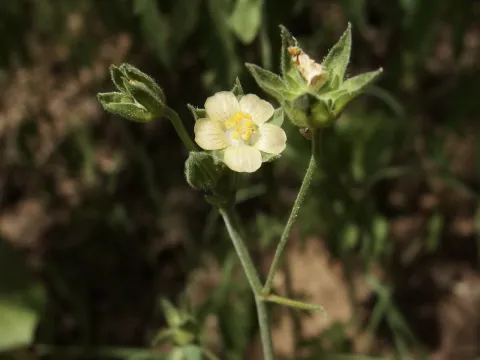
Botanically, the plant is characterized by its erect, branching stems and alternately arranged leaves. The flowers are small, typical of the mallow family, and bloom throughout the summer season. Its root system is deep and efficient, allowing the plant to sustain growth in climates where moisture levels may be inconsistent during the peak growing months.
Agronomic requirements for this crop focus on well-drained, fertile soil and full sun exposure. It is not overly demanding in terms of soil quality, but performance is significantly better in loamy substrates with balanced nutrients. Proper spacing is essential to ensure adequate airflow, which prevents the development of fungal pathogens common to broad-leaved plants.
Host use of Anoda parviflora includes its application in ornamental gardening and as an experimental biomass crop. The following benefits are often noted:
- High production of vegetative biomass
- Tolerance to wide environmental fluctuations
- Ability to restore soil cover in degraded areas
The plant is susceptible to common pests such as spider mites and aphids, particularly in high-humidity or poorly ventilated conditions. Management strategies involve regular field inspections, maintaining appropriate soil drainage, and applying integrated pest management (IPM) practices to ensure the health and vitality of the stand.
Photo gallery