Soft snapdragon
Antirrhinum molle L.
Description
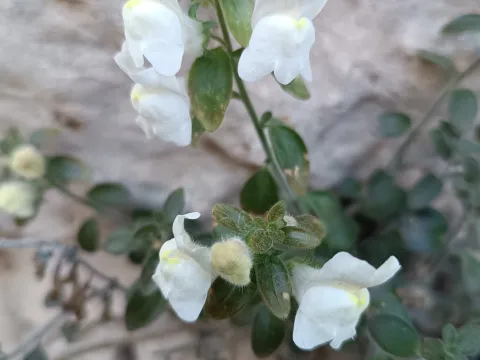
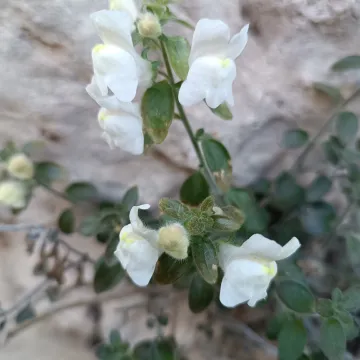
Soft snapdragon (Antirrhinum molle L.) is a perennial herbaceous plant belonging to the Plantaginaceae family. Unlike common garden snapdragons, this specific species is distinguished by its soft, pubescent foliage and stems, creating a silver-grey aesthetic that makes it highly prized by collectors of rare alpine plants.
The plant originates from the mountainous regions of Southwestern Europe, particularly the Pyrenees. Its natural habitat consists of rocky crevices and limestone cliffs, which has determined its evolutionary adaptation to nutrient-poor soils and high-drainage environments, making it a perfect candidate for specialized rock gardening.
Botanically, it features a low-growing, branched habit. The leaves are typically ovate and covered in fine hairs. The flowers retain the characteristic zygomorphic shape of the Antirrhinum genus but appear in delicate, pale shades of white, cream, or light pink, usually blooming throughout the late spring and summer months.
Cultivation requires strict adherence to alpine growing conditions. The soil must be exceptionally well-drained, ideally a gritty, alkaline mixture that prevents water logging. Sun exposure is critical, as the plant demands significant light intensity to maintain its compact form and prevent etiolation, which can occur in shaded or humid conditions.
In terms of agricultural and horticultural use, this species is primarily utilized for aesthetic purposes in rock gardens, scree beds, and stone walls. Typical pests include aphids and mites, while the primary disease risk involves root rot caused by stagnant moisture. Maintaining clean, airy conditions is essential for the longevity of the plant in a landscape setting.
Photo gallery