Arctotheca populifolia
Arctotheca populifolia
Description
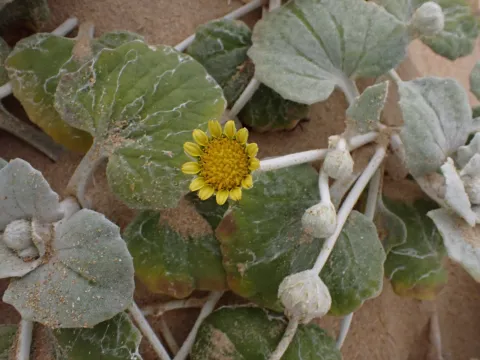
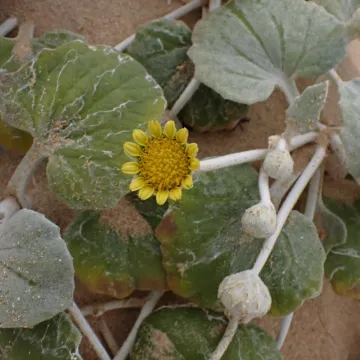
Arctotheca populifolia is a perennial herbaceous plant belonging to the Asteraceae family. It is characterized by its densely pubescent, silvery-grey foliage, which resembles the leaves of a poplar tree, providing the inspiration for its specific epithet. This species is highly specialized for life in demanding maritime environments.
The plant is native to the coastal regions of Southern Africa. It has evolved to thrive in the harsh conditions of sandy shores, where it plays a critical ecological role in anchoring shifting sand dunes. Its natural range is concentrated in these specific coastal ecosystems, where it effectively withstands the constant pressure of salt-laden winds.
Botanically, Arctotheca populifolia features a prostrate growth habit, allowing it to cover and stabilize large surface areas of sand. Its root system is well-developed, enabling the plant to remain firmly anchored in loose, nutrient-poor substrates. The flowers appear as typical daisy-like inflorescences with a yellow hue, blooming throughout the favorable growing seasons.
Cultivation requirements focus on excellent drainage and full sun exposure. The plant is remarkably drought-tolerant and well-adapted to high soil salinity levels. It requires minimal fertilization, as it is naturally optimized for sandy coastal soils. However, waterlogging must be strictly avoided, as the plant is highly sensitive to root asphyxiation in saturated conditions.
Economic and agricultural utility is centered on environmental restoration and coastal management. Key uses include:
- Stabilization of coastal dunes to prevent wind erosion and sand migration.
- Reclamation of degraded or eroded maritime areas.
- Use as a resilient groundcover in coastal landscaping projects.
In terms of plant health, the most common issues arise from poor air circulation or excessive soil moisture, which can lead to fungal infections. Pests such as aphids or soil-borne nematodes can occasionally cause stress, but the plant generally displays strong natural resistance, maintaining healthy populations within its native range when environmental conditions are optimal.
Photo gallery