Aristida behriana
Aristida behriana
Description
Aristida behriana is a perennial grass species belonging to the family Poaceae. This hardy plant is highly valued for its ability to thrive in arid and semi-arid environments, making it a significant subject for agricultural research concerning sustainable land management in dry regions.
The plant originates from Australia and is primarily found in regions with low rainfall and high heat. Its cultivation range is centered around rangelands where it serves as a robust component of native pasture systems, providing essential cover and limited forage where more delicate species would fail to survive.
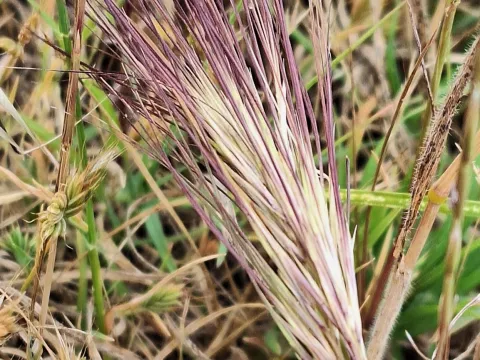
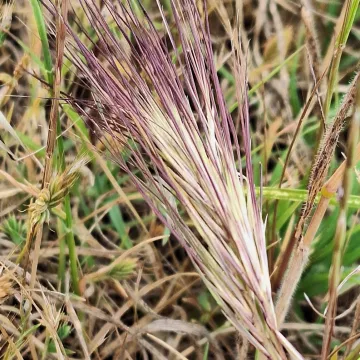
Botanically, this species is characterized by its dense tussock-forming growth habit. The leaves are typically narrow and stiff, designed to reduce water loss. A distinct morphological feature is the presence of three-awned florets, which are highly efficient at attaching to soil particles and animal coats for seed dispersal.
Regarding climate and soil requirements, this grass thrives in well-drained, sandy, or stony soils with low nutrient availability. From an agronomic standpoint, management focuses on moderate grazing pressure; overgrazing is the primary factor that causes the decline of Aristida stands in favor of invasive or less desirable weeds.
The economic value of this crop is rooted in its role in land rehabilitation and soil stabilization. Regarding pests and diseases, the plant is generally resistant, although it can be susceptible to various rust fungi and larvae that feed on vegetative tissues during peak growth, necessitating balanced pasture rotation strategies to maintain plant health.
Photo gallery