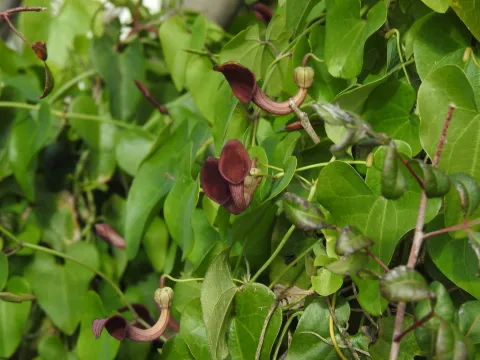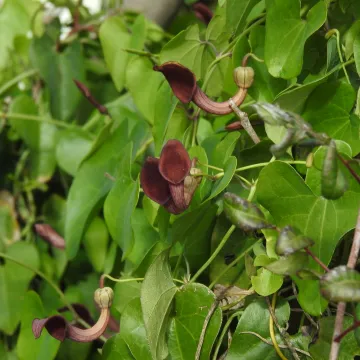
Aristolochia baetica
Aristolochia baetica
Description
Aristolochia baetica, commonly known as the Baetic pipevine, is a perennial evergreen climber belonging to the Aristolochiaceae family. This species is highly regarded for its unique, pipe-shaped flowers which have evolved a sophisticated mechanism to trap insects, ensuring efficient pollination within its native ecological niche.
The plant originates from the Mediterranean region, specifically concentrated in the Iberian Peninsula and North Africa. It typically inhabits rocky slopes, scrublands, and shaded thickets. Understanding these native habitat conditions is crucial for successful cultivation, as the plant thrives in microclimates that provide moderate protection from extreme temperature fluctuations.
Botanically, this climber is characterized by its slender, twining stems and alternate, cordate-shaped leaves. The plant exhibits a vigorous growth habit when provided with appropriate structural support. The flowers appear during the spring and early summer, displaying a complex, often brownish-purple perianth that serves as the primary identification feature for the species.
Agricultural requirements for Aristolochia baetica include well-draining, nutrient-rich soil with a neutral to slightly alkaline pH. Irrigation should be regular but cautious, as the root system is susceptible to decay in waterlogged conditions. In garden settings, it is essential to install sturdy trellis systems or support structures to accommodate the natural climbing behavior of the vines.
The primary economic use of this culture is ornamental, where it is utilized for vertical gardening, covering pergolas, and creating privacy screens. Due to the presence of aristolochic acid, its use in traditional medicine must be handled with professional oversight, as the compounds can be toxic if improperly prepared or ingested. Its aesthetic appeal remains its most prominent commercial asset.
- Requires structural support for vertical development.
- Thrives in partial shade or filtered light.
- Needs well-drained, fertile soil substrate.
- Moderate pruning is recommended to maintain shape.
Common pests include spider mites, which can proliferate in hot, dry environments, while fungal infections like root rot typically occur due to excessive soil moisture. Agronomists recommend monitoring for these issues early in the season and ensuring proper air circulation around the canopy to maintain the overall vigor and health of the plant.
Photo gallery