Black sagebrush
Artemisia nova
Description
Black sagebrush (Artemisia nova) is a perennial dwarf shrub belonging to the Asteraceae family. It is distinct from other sagebrush species due to its low-growing, compact habit and its specific evolutionary adaptation to high-elevation, arid, and nutrient-poor desert environments.
The plant is native to the western regions of North America, particularly throughout the Great Basin and the Colorado Plateau. It primarily inhabits rocky, shallow, and calcareous soils where moisture is extremely limited, making it an essential pioneer species in the ecological restoration of degraded semiarid landscapes.
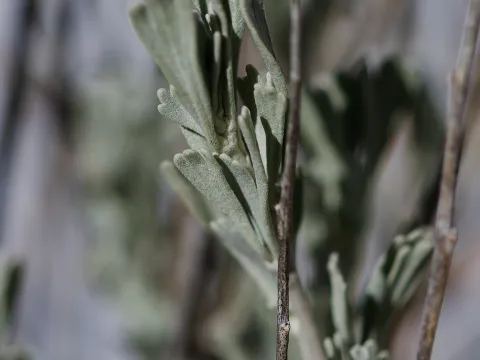
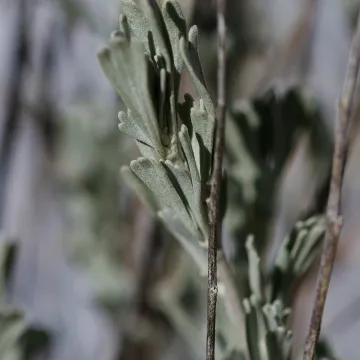
Botanically, Artemisia nova is characterized by its woody base and fine, grey-green foliage covered in dense, glandular hairs that minimize transpiration. The leaves are typically trifid, providing a dense canopy that shades the soil around the base. Its small, yellow flower clusters appear in late summer and are wind-pollinated.
Cultivation requirements for black sagebrush are strict regarding soil aeration; it requires exceptional drainage and will fail in waterlogged conditions. The plant is highly frost-tolerant and thrives in poor, rocky substrates where other crops cannot survive. It requires no fertilization or irrigation once established, as it is perfectly evolved for survival in harsh climates.
Its primary agricultural and ecological uses include soil stabilization, erosion control, and serving as a critical winter forage source for wildlife, such as pronghorn and mule deer. Beyond its ecological role, it is increasingly popular in xeriscaping and sustainable landscaping, where its silver-grey color and drought tolerance make it a low-maintenance, ornamental, and functional choice.
Photo gallery