Arum dioscoridis
Arum dioscoridis
Description
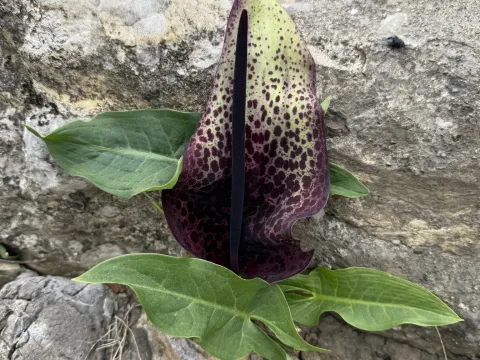
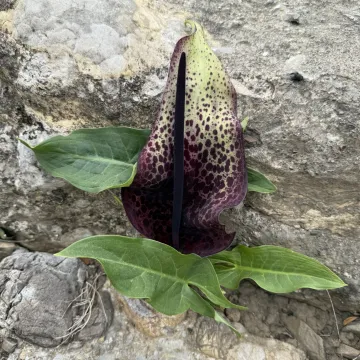
Arum dioscoridis is a fascinating perennial herb belonging to the Araceae family. This species is widely recognized for its unique inflorescence, featuring a spadix protected by a large, often spotted spathe, which serves to attract pollinators through its specific scent and distinct coloration.
The plant originates from the Eastern Mediterranean region, covering territories such as Turkey, Syria, and Lebanon. It is naturally adapted to habitats like rocky hillsides and shaded woodland edges, where it thrives in environments that provide moisture during the spring growing season and dry conditions during the summer dormancy phase.
Botanically, the plant grows from a starchy underground tuber that stores energy for rapid leaf development in early spring. The foliage typically consists of large, arrowhead-shaped leaves that can reach significant sizes in optimal conditions. The plant's architecture is highly specialized to ensure successful reproductive cycles in its native climate.
Cultivation requires careful attention to soil composition, as Arum dioscoridis necessitates well-drained, nutrient-rich soil to prevent tuber rot. In agricultural or garden settings, it is crucial to mimic its natural cycle by reducing irrigation during the summer months when the foliage dies back and the plant enters dormancy.
In terms of practical utility, the species is strictly ornamental and prized by botanical enthusiasts for its structural beauty and exotic appearance. Due to the presence of calcium oxalate crystals in the plant tissues, it should be handled with care, as it is toxic if ingested and can cause skin irritation.
- Ensure excellent soil drainage
- Provide partial to full shade
- Protect tubers from winter waterlogging
- Avoid ingestion and direct skin contact
Photo gallery