Italian arum
Arum italicum
Description
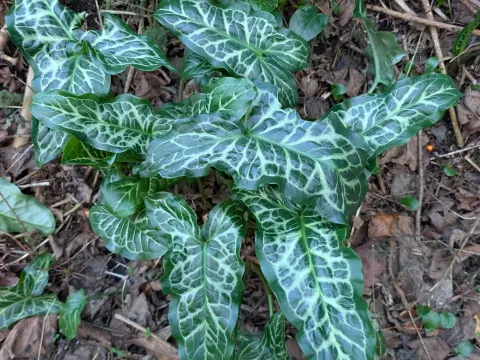
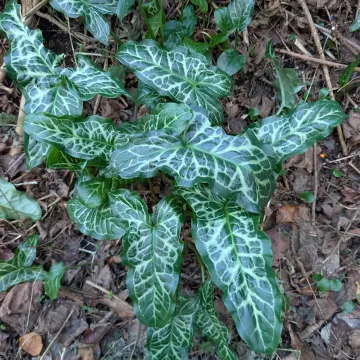
Italian arum (Arum italicum) is a distinctive perennial herbaceous plant belonging to the Araceae family. This species is highly valued in horticultural circles for its unique, arrow-shaped leaves featuring intricate silver-white veining and its dramatic, club-like inflorescence.
Originating from the Mediterranean region, including Southern Europe and parts of North Africa, this plant has adapted to temperate climates. Its natural habitats typically include shady woodland floors and damp, sheltered valleys where it can thrive in nutrient-rich, moist soil conditions throughout the growing season.
Botanically, the plant is characterized by its seasonal cycle: it produces foliage in the autumn that often persists throughout the winter. The inflorescence consists of a spadix protected by a large, pale green spathe, followed by a striking spike of orange-red berries. It is important to note that the plant contains calcium oxalate crystals, making all parts toxic if ingested.
Cultivation requirements for the Italian arum center on providing a partially shaded site with protection from harsh afternoon sun. The soil must be fertile, well-draining, and rich in organic matter. While it is relatively resilient, gardeners must ensure consistent moisture during the active growth phase, as dry soils can significantly inhibit leaf development.
In landscaping and agriculture, the primary application of Arum italicum is ornamental. It is commonly used as a structural groundcover in shade gardens, woodland borders, or understory plantings. Due to its hardiness and visual appeal, it is a preferred choice for adding texture and interest to otherwise challenging, low-light garden environments.
Photo gallery