St. Peter's wort
Ascyrum stans
Description
St. Peter's wort (Ascyrum stans) is a perennial semi-shrub belonging to the Hypericaceae family. Often grouped with the Hypericum genus, it stands out for its unique architectural form and striking floral displays. It is a distinctive plant often sought after by botanical collectors and landscape designers looking for drought-tolerant yet visually appealing groundcovers or low hedge components.
The plant originates from the eastern regions of North America, typically inhabiting sandy, well-drained soils and woodland edges. Its natural range extends through various temperate and subtropical environments. This evolutionary history makes it highly adaptable to a variety of garden settings, provided the core environmental requirements are met during the establishment phase.
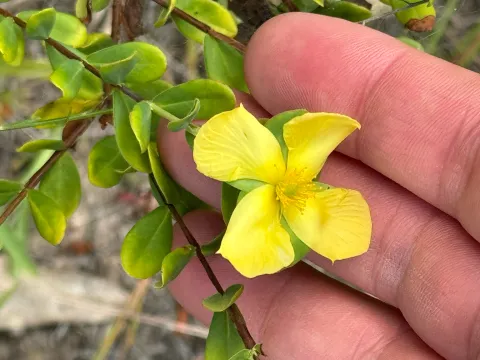
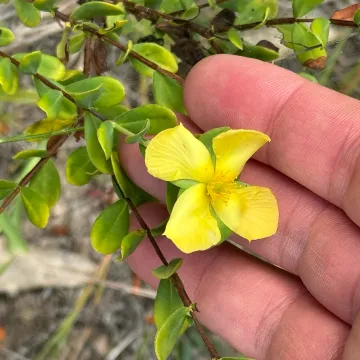
Botanically, Ascyrum stans is characterized by its four-angled, upright stems and lanceolate leaves that grow in opposite pairs. The most recognizable feature is its yellow flower with four cross-shaped petals. These blooms typically appear in mid-summer and offer a vibrant golden contrast against the lush green foliage, maintaining a tidy, compact habit throughout the growing season.
Cultivation requires specific soil conditions to ensure long-term success. The plant thrives in acidic, sandy-loam soils that offer excellent drainage. While it is relatively low-maintenance, the following aspects of management are essential:
- Maintaining consistent soil moisture without waterlogging.
- Applying a light layer of mulch to maintain root coolness.
- Pruning back old growth in early spring to encourage dense, fresh foliage.
The primary utility of this culture is ornamental, where it serves as an excellent choice for rock gardens, borders, and mass plantings. From an agricultural and botanical perspective, it also serves as a study model for Hypericaceae ecology. While generally robust, gardeners should monitor for common issues such as root rot in poorly drained substrates and occasional infestations of aphids or spider mites, which can be managed with standard integrated pest management practices.
Photo gallery