Dyer's Woodruff
Asperula tinctoria
Description
Dyer's Woodruff (Latin: Asperula tinctoria) is a perennial herbaceous plant belonging to the Rubiaceae family. Historically valued for the vibrant red pigments derived from its roots, this plant serves as a natural alternative to synthetic dyes. It is a niche industrial crop with specific ecological requirements that must be met for successful commercial production.
The plant originates from the temperate regions of Europe and Western Asia. Its natural habitat includes dry grasslands, light forests, and rocky outcrops, which indicates a preference for well-drained environments. As an agricultural crop, it thrives in locations where competition from aggressive weeds is minimized and sunlight exposure is abundant.
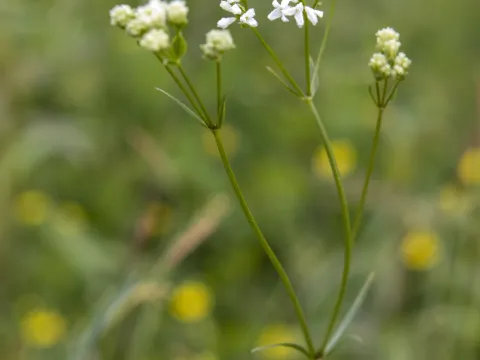
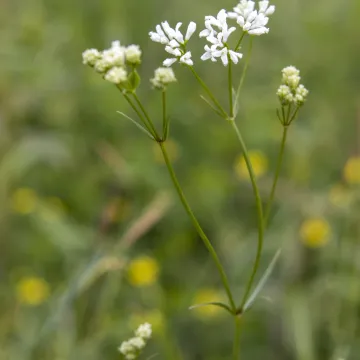
Botanically, it is characterized by a creeping rhizome and slender, angular stems that reach up to 60 cm in height. The leaves are narrow and whorled, providing a distinct appearance during the growth season. Small white flowers emerge in summer, typically organized in loose cymes, which are essential for its reproductive success in natural populations.
Successful cultivation requires soil that is light, permeable, and preferably rich in calcium. Dyer's Woodruff is notably drought-resistant but highly susceptible to waterlogging. To achieve high yields of quality root material, growers should focus on soil preparation that ensures deep aeration and maintains a neutral to slightly alkaline pH level.
Standard agronomic practices involve weed control during the early establishment phase and careful monitoring for root rot or powdery mildew. These issues often arise in conditions of high humidity or poor field drainage. By adhering to proper spacing and crop rotation strategies, farmers can maintain a healthy stand without reliance on intensive chemical interventions.
- Extraction of natural anthraquinone-based pigments for textiles.
- Use in traditional botanical dyes and crafts.
- Investigation of potential pharmacological properties of the rhizome.
- Application in restorative landscaping for dry, rocky terrain.
Photo gallery