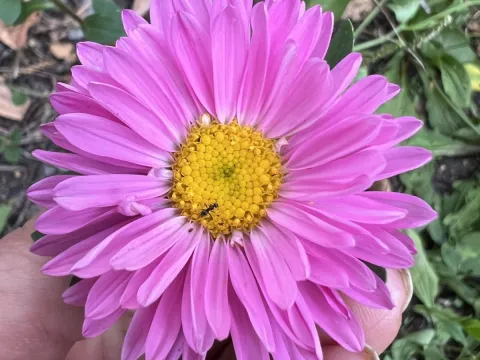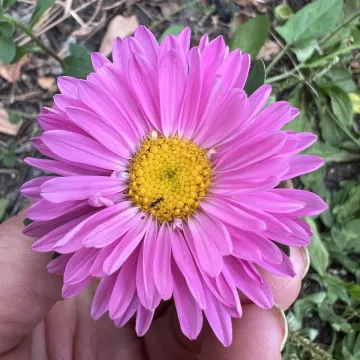
China aster
Callistephus chinensis (L.) Nees
Description
China aster (lat. Callistephus chinensis (L.) Nees) is a popular annual herbaceous plant belonging to the Asteraceae family. Known for its wide variety of bloom types and vibrant colors, it serves as a staple crop in both professional floriculture and residential ornamental gardening.
Originating from East Asia, specifically China, Mongolia, and Korea, this species has been cultivated for centuries. Due to its adaptability to various temperate climates, it has achieved global distribution, making it one of the most commercially significant annual flowering crops used for cut flower production and landscaping.
Botanically, the plant features a sturdy, branching stem with alternate leaves and a dense, fibrous root system. The flowers are composite heads, ranging from simple, daisy-like structures to fully double, pompon-like blooms. These characteristics make it a versatile plant for various aesthetic applications in public and private gardens.
Successful cultivation requires a sunny location with well-drained, fertile, neutral soil. China aster is sensitive to soil-borne pathogens; therefore, crop rotation is essential. It thrives in moderate temperatures and requires consistent moisture, though waterlogging must be avoided to prevent stem rot and other physiological disorders common in intensive production.
The primary economic use is the commercial flower market, where stems are prized for their longevity in vases and high color intensity. Maintenance is focused on disease management and irrigation control, as the plant is susceptible to several specific biological threats:
- Fusarium wilt, which is the most critical fungal disease.
- Damping-off, commonly occurring during the seedling stage.
- Aphids, which can vector viruses and damage floral buds.
- Spider mites, particularly prevalent in hot and dry environmental conditions.
Photo gallery