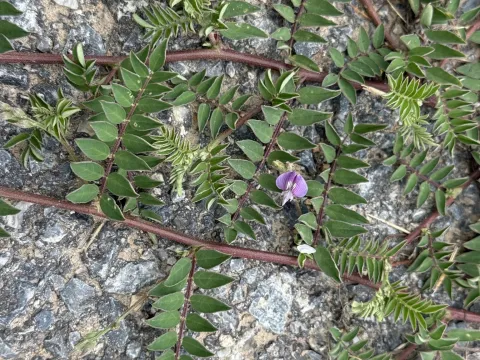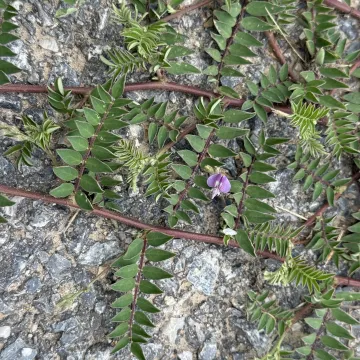
Flat-podded milkvetch
Astragalus complanatus
Description
Flat-podded milkvetch (Astragalus complanatus) is a perennial herbaceous plant belonging to the large Fabaceae family. As an agricultural crop, it is gaining recognition primarily for its pharmaceutical value, as it serves as a source of specific bioactive compounds, including isoflavonoids and polysaccharides, which are extensively used in traditional medicine.
Originating from East Asia, this species is native to regions of China, Mongolia, and surrounding territories. It typically thrives in temperate climates characterized by well-drained, sandy, or rocky soils. Its natural habitat includes slopes and open grasslands, reflecting its evolutionary adaptation to environments where moisture retention and soil drainage are key factors for survival.
Botanically, Astragalus complanatus is identified by its strong taproot system, which helps the plant withstand significant dry spells. The foliage is pinnately compound and often covered in fine hairs, acting as a defense against moisture loss. The flowers are small, arranged in dense racemes, typical of the legume family, and they produce distinctive flattened pods, which give the species its common name.
Agronomically, the crop requires full sun and well-drained soil to prevent root rot. Seeding should occur in early spring, and seeds often require scarification to break dormancy and ensure uniform germination. Once established, the plants are relatively low-maintenance, requiring minimal irrigation but benefiting from weeding during the critical early establishment phase to prevent competition.
The primary use of the flat-podded milkvetch is in the production of herbal medicines, supplements, and health-promoting extracts. Beyond its pharmaceutical significance, it plays a role in local ecosystems as a nitrogen-fixing plant, which can contribute to soil fertility. It is rarely used as a forage crop due to its specialized chemical composition, which is optimized for medical rather than nutritional purposes.
- Excellent drought tolerance once established
- Requires sunny, open locations with excellent drainage
- High demand for phosphorus for root development
- Susceptible to fungal infections under waterlogged conditions
Photo gallery