Drummond's milkvetch
Astragalus drummondii
Description
Drummond's milkvetch (Astragalus drummondii) is a robust perennial herb belonging to the Fabaceae family. As a member of the legume family, it possesses the natural ability to fix atmospheric nitrogen, which significantly enhances soil fertility and makes it a sustainable choice for forage improvement projects.
Native to the prairies and foothills of North America, this species has evolved in regions characterized by wide temperature ranges and periodic droughts. Its natural habitat includes open grasslands where it competes well with other native vegetation, demonstrating its resilience in varied ecological settings.
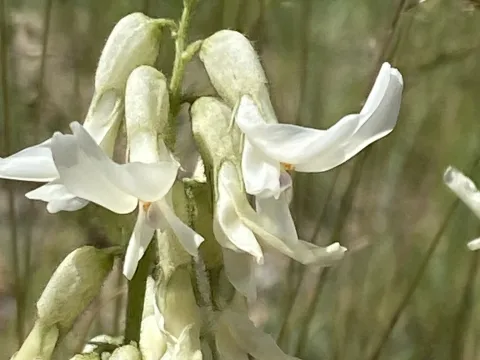
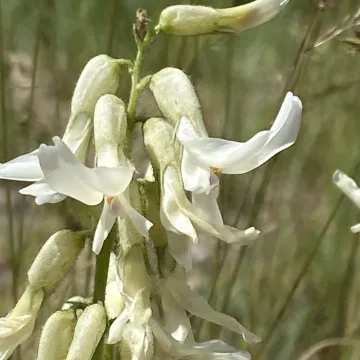
Botanically, the plant is distinguished by a deep taproot system and thick, pubescent stems that help conserve moisture. The foliage consists of pinnately compound leaves, and its inflorescences display showy, cream-colored flowers. These structures are evolutionary adaptations designed to survive in harsh, open environments.
For successful cultivation, Drummond's milkvetch requires well-drained soils ranging from loams to gravelly substrates. It performs best in areas with full sun exposure. Agronomic management focuses on successful stand establishment, as seeds may require scarification due to their hard seed coats, ensuring optimal germination rates in the first year.
Economically, the species is valued for its role as high-quality forage for livestock and its contribution to erosion control on marginal lands. Its deep root system stabilizes soil effectively, and its presence promotes healthier grassland ecosystems. Additionally, it serves as an important resource for native pollinators in the landscape.
- Excellent drought and cold tolerance.
- Significant nitrogen-fixing capabilities.
- Effective soil stabilization for slopes.
- Highly palatable forage for range livestock.
Photo gallery