Stemless milkvetch
Astragalus exscapus
Description
Stemless milkvetch, scientifically known as Astragalus exscapus, is a perennial herbaceous plant belonging to the Fabaceae family. As its name suggests, the plant is characterized by a lack of a visible stem, with its foliage forming a compact rosette that sits close to the ground, an evolutionary trait that helps the plant thrive in harsh, open environments.
The plant is native to the steppe and forest-steppe zones of Europe. It prefers habitats with full sun exposure and well-drained soils, often appearing on limestone-rich or sandy substrates. Its natural range demonstrates its high adaptation to continental climates characterized by hot, dry summers and cold winters.
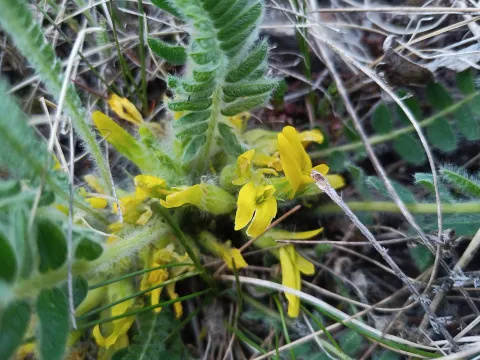
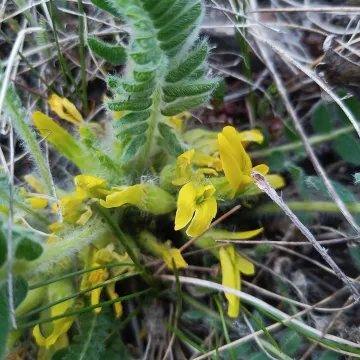
Botanically, the species is defined by a deep-reaching taproot that anchors the plant and allows it to access water during prolonged droughts. The leaves are typically pinnate and covered with fine hairs, which help minimize transpiration. The yellow flowers are clustered in the center of the rosette, producing small pods that contain the seeds once pollinated.
Regarding agricultural requirements, Stemless milkvetch thrives in well-aerated, lean soils with a neutral or alkaline pH. It is crucial to prevent waterlogging, as the root system is highly susceptible to rot in saturated conditions. Cultivation efforts should focus on weed management during the seedling stage, as the plant exhibits relatively slow early growth.
The primary economic use of this plant is found in the pharmaceutical industry due to the presence of secondary metabolites like saponins and flavonoids. In broader agriculture, it is valued as a reclamation species for soil improvement; because it is a legume, it fixes atmospheric nitrogen, thus helping to restore the fertility of degraded lands.
- High drought and frost tolerance.
- Nitrogen-fixing capacity.
- Low input requirements for field maintenance.
Photo gallery