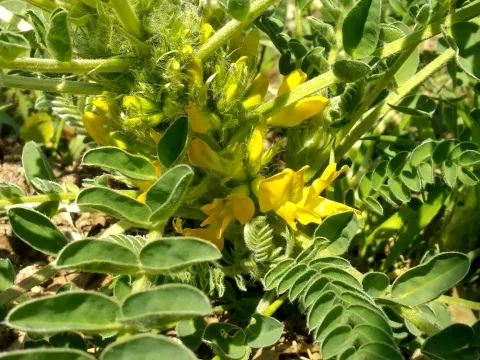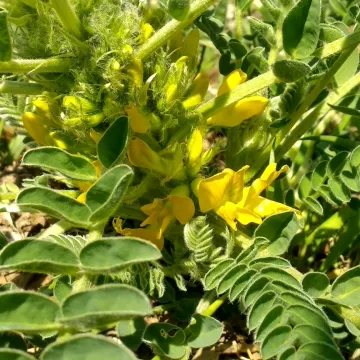
Large-fruited milkvetch
Astragalus macrocarpus
Description
Large-fruited milkvetch (Astragalus macrocarpus) is a perennial herbaceous plant belonging to the legume family (Fabaceae). This species is recognized by agronomists for its significant drought tolerance and potential for sustainable land management in arid or semi-arid agricultural regions.
The plant originates from the regions of Western and Central Asia and parts of Southeastern Europe. It typically thrives in open, sun-drenched habitats with well-drained, nutrient-poor soils, demonstrating a high degree of plasticity regarding environmental stressors common in these regions.
Botanically, the plant features a robust taproot system that allows it to reach moisture deep within the soil profile. The foliage is pinnate and often pubescent, which helps in reducing water loss. As the name implies, the plant is distinguished by its large, elongated fruit pods that play a critical role in its reproductive cycle.
For successful cultivation, certain agronomic practices must be followed:
- selection of well-drained, calcareous or sandy loam soils;
- full sunlight exposure is mandatory for optimal growth and flowering;
- minimal irrigation during the establishment phase;
- avoiding waterlogged conditions which are detrimental to root health.
The primary economic use of this crop lies in its potential as a forage component for grazing livestock and its medicinal properties known in traditional botany. Management strategies must include monitoring for pests such as seed beetles and aphids, as well as protecting the crop from fungal pathogens that thrive in high-humidity microclimates.
Photo gallery