Atractylis cancellata
Atractylis cancellata
Description
Atractylis cancellata is a unique annual herbaceous plant belonging to the Asteraceae family. Known for its distinctive flower heads surrounded by rigid, latticed bracts, this species is well-adapted to arid environments. Within the agricultural context, it is categorized as a xerophytic plant with potential for niche cultivation in hot, dry climates.
The origin and primary distribution area of this species are centered in the Mediterranean Basin. It is commonly found in countries across Southern Europe and Northern Africa. These regions provide the necessary environmental stressors, such as prolonged summer droughts and rocky soil conditions, which the plant has evolved to tolerate over generations.
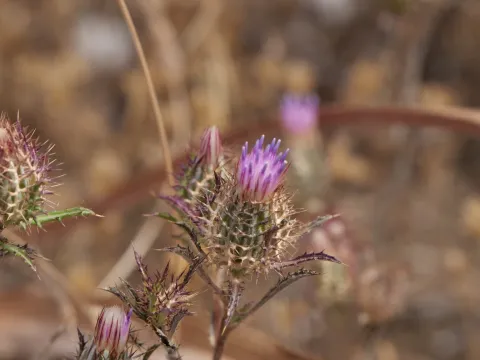
Botanically, Atractylis cancellata is characterized by its short, sturdy stature, typically ranging from 10 to 30 cm in height. The leaves are narrow and often pubescent, an evolutionary adaptation to reduce water loss. The plant's most striking feature is its involucre—a basket-like structure of interlocking bracts that protects the developing florets within the flower head.
Agrotechnical requirements prioritize well-drained, nutrient-poor soil, such as limestone or sandy loam. The plant is highly photophilous, requiring full sun exposure to thrive. When grown, it is essential to avoid over-irrigation, as waterlogged conditions often lead to root decay and susceptibility to fungal pathogens. It is typically propagated by seeds sown directly in the field.
Regarding хозяйственное use, the plant is primarily researched for its chemical constituents, including specialized essential oils and sesquiterpene lactones. Beyond its pharmaceutical interest, it holds promise for sustainable landscaping and soil stabilization in arid regions. Common pests include aphids, while diseases are generally limited to root rot caused by poor soil aeration.
- Exceptional tolerance to high heat and solar radiation.
- Adaptability to nutrient-deficient rocky soils.
- Low input requirements for commercial maintenance.
- Potential for phytotherapy and secondary metabolite production.
Photo gallery