Sea orache
Atriplex halimus
Description
Sea orache (Atriplex halimus) is a perennial evergreen shrub belonging to the Amaranthaceae family. Known for its remarkable resilience, this species has gained significant interest in modern agricultural science as a highly adaptable crop capable of thriving in extreme environments that are typically unsuitable for common farming.
Native to the Mediterranean basin, North Africa, and parts of Western Asia, the plant is classified as a halophyte. It possesses unique physiological mechanisms that allow it to sequester and tolerate high levels of salinity in both the soil and irrigation water, making it a valuable asset for sustainable agriculture in arid regions.
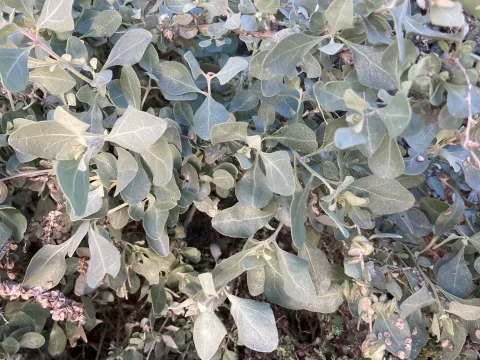
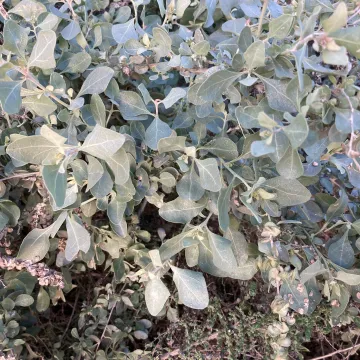
Botanically, the plant features a dense, shrubby growth habit reaching heights of up to 2 meters. Its foliage is notably silvery-grey, covered in tiny bladder hairs that reflect sunlight and reduce water loss. This anatomical adaptation is crucial for its survival during periods of intense heat and prolonged drought characteristic of its native distribution areas.
The cultivation requirements for Atriplex halimus are relatively straightforward compared to traditional crops. It thrives in full sun and requires well-drained soil, although it shows great tolerance for poor-quality, rocky, and saline substrates. Management usually involves periodic pruning to maintain biomass production, which is essential for ensuring a steady yield of green fodder throughout the seasons.
Economically, sea orache is primarily utilized as a drought-resistant fodder source for livestock, offering a reliable nutritional profile where traditional grasses cannot grow. Beyond its feeding value, it serves a critical role in ecological land management, particularly for soil stabilization, windbreaks in coastal regions, and the bioremediation of degraded or saline soils. While generally hardy, the crop can occasionally be affected by aphids or defoliating larvae, yet it rarely requires intensive pest management strategies due to its robust natural defenses.
Photo gallery