Slender-fruit saltbush
Atriplex leptocarpa
Description
Slender-fruit saltbush (Atriplex leptocarpa) is a specialized forage crop belonging to the Amaranthaceae family. It is recognized for its remarkable resilience to harsh environmental conditions, making it a valuable subject for agricultural research focused on developing sustainable farming systems for arid and saline regions.
Originating from the arid zones of Australia, this plant has adapted to survive in environments characterized by prolonged droughts and high soil salinity. Its native habitat includes open woodlands and grasslands where it serves as a critical component of the local ecosystem, providing stabilization for fragile soils and food for both livestock and native fauna.
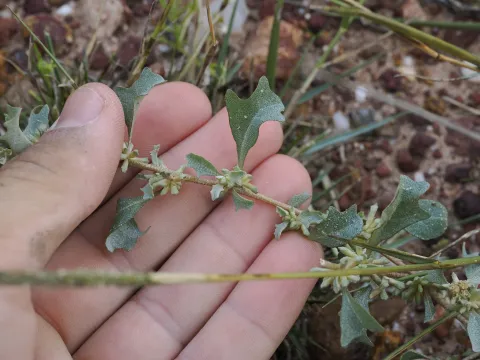
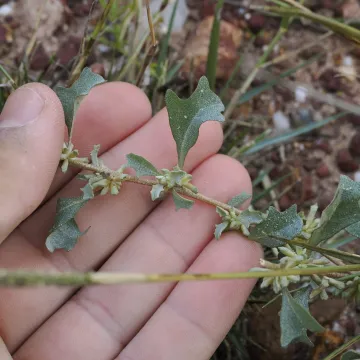
Botanically, Atriplex leptocarpa is a herbaceous perennial that often exhibits a prostrate or semi-erect growth habit. The leaves are typically scurfy or mealy in appearance, which is a key adaptation for reflecting intense sunlight and minimizing water loss through transpiration. The fruits are small and compressed, which facilitates dispersal by wind and opportunistic animal movement.
Regarding cultivation requirements, the plant thrives in well-drained soils and shows a high tolerance for alkaline and salty environments. It requires minimal irrigation once established, as it is highly efficient at water uptake. In terms of agronomy, growers should prioritize sowing in warm soil temperatures to ensure rapid germination and root development, as the plant grows most vigorously under hot, sunny conditions.
The primary agricultural use of this crop is forage for livestock, particularly during seasons when traditional grasses are unavailable. Its economic value is centered on:
- Providing a protein-rich feed source for sheep and cattle.
- Reclaiming and stabilizing degraded land areas.
- Serving as a fire-break vegetation in arid rangelands.
Management of pests and diseases for this species is relatively straightforward due to its inherent hardiness. While the plant can be susceptible to leaf-feeding insects and occasional fungal pathogens under excessively humid conditions, it rarely requires heavy chemical intervention. Standard cultural practices, such as preventing waterlogging, are usually sufficient to maintain a healthy and productive stand of the crop.
Photo gallery