Australian blackthorn
Bursaria spinosa Cav.
Description
Australian blackthorn (lat. Bursaria spinosa) is a perennial shrub or small tree belonging to the Pittosporaceae family. This species is widely recognized for its high adaptability and dense, thorny branches that serve as an excellent natural barrier against browsing animals and wind.
Native to Australia, this plant is found across all states, including Tasmania. In its natural environment, the blackthorn thrives in open forests, woodland edges, and rocky outcrops, displaying significant resilience to fluctuating seasonal temperatures and periods of moderate drought.
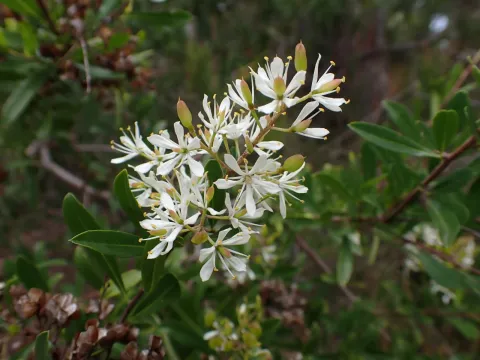
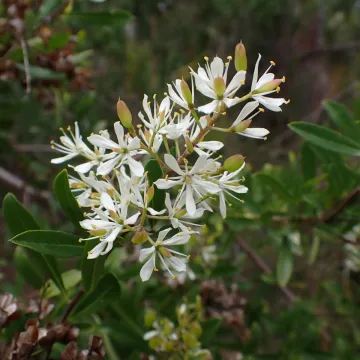
Botanically, the plant is a multi-branched shrub typically growing between 3 and 10 meters in height. It features lance-shaped or obovate leaves and prominent, sharp spines along its stems. During the flowering season, the shrub is covered in clusters of fragrant white blossoms that attract a diverse array of pollinators.
Successful cultivation of Bursaria spinosa requires well-drained soil with a neutral to slightly acidic pH. The plant is remarkably low-maintenance, preferring full sun to partial shade. Standard agricultural practices include regular crown pruning to maintain the desired hedge shape and removal of dead wood to ensure plant vitality.
- Valuable nectar source for bees during dry seasons.
- Effective candidate for windbreaks and erosion control.
- Suitable for native garden restoration projects.
The plant is highly valued for its contribution to honey production, as it blooms during times when other nectar sources may be scarce. Beyond its apiary importance, it is frequently used in landscape design to form impenetrable security hedges and as a hardy structural element in revegetation efforts.
Typical pests include various aphid and scale insects, which tend to proliferate in stagnant or overcrowded conditions. Diseases such as leaf spot can occur if soil drainage is poor or if the site has insufficient airflow. Providing adequate space between plants and monitoring moisture levels are essential for effective management.
Photo gallery