Big crabgrass
Axonopus furcatus
Description
Big crabgrass (scientific name: Axonopus furcatus) is a perennial grass species belonging to the Poaceae family. It is recognized for its robust growth habit and is primarily cultivated as a forage crop in regions where environmental conditions, such as high soil moisture, limit the growth of other common pasture grasses.
The origin of this species is traced to the tropical and subtropical regions of the Americas. Its natural habitat is typically characterized by moist, low-lying areas, river banks, and marshy grounds. Due to its adaptation to these specific environments, it has become an essential plant in agricultural systems located in humid climates across the southeastern United States and Latin America.
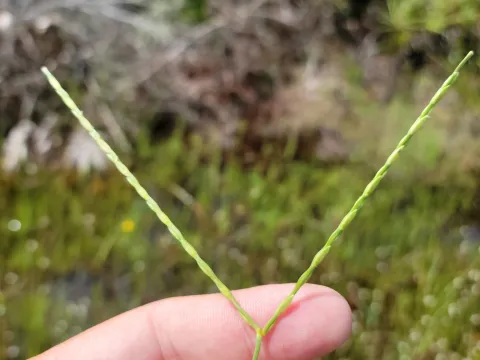
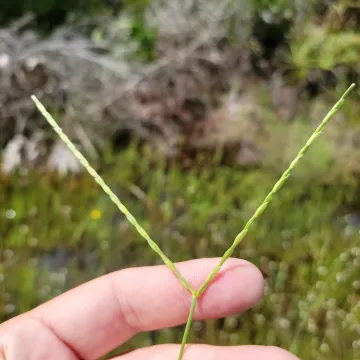
From a botanical perspective, Axonopus furcatus features creeping stolons that facilitate rapid horizontal expansion, creating a dense and durable sod. The stems are generally erect, reaching heights between 30 and 60 centimeters. The leaf blades are smooth, vibrant green, and possess a soft texture, making them highly palatable for grazing livestock. The inflorescence consists of two or three racemes radiating from the apex, which is a key diagnostic feature of the species.
Regarding its cultivation requirements, the plant is known for specific environmental preferences:
- It thrives in wet and poorly drained soils where other forage species might perish.
- The plant shows significant tolerance to acidic soil conditions.
- It requires full sunlight to maintain a dense canopy and optimal forage production.
- Proper management requires grazing rotation to prevent overgrazing while ensuring maximum biomass recovery.
Economically, this species is highly valued as a pasture grass due to its persistence under grazing pressure. While it is generally hardy, potential issues include fungal diseases that may arise from stagnant water conditions and various insects that target grasses. Effective management involves monitoring for these stressors and ensuring that the pasture is not subjected to severe drought, which can significantly reduce the vitality of the plant.
Photo gallery