Russian pigweed
Axyris amaranthoides L.
Description
Russian pigweed (Latin: Axyris amaranthoides L.) is an annual herbaceous plant belonging to the Amaranthaceae family. While it shares some morphological similarities with crops of the same family, it is recognized primarily as a widespread and aggressive weed in agricultural systems. It often infests cereal fields, cultivated pastures, and disturbed soil environments across temperate regions.
The species is native to Central and Northern Asia, specifically areas in Siberia and Mongolia, but it has become invasive in many parts of North America and Europe. Its ability to tolerate harsh climatic conditions and thrive in diverse soil types has allowed it to naturalize effectively in disturbed landscapes, where it competes aggressively for space and nitrogen resources.
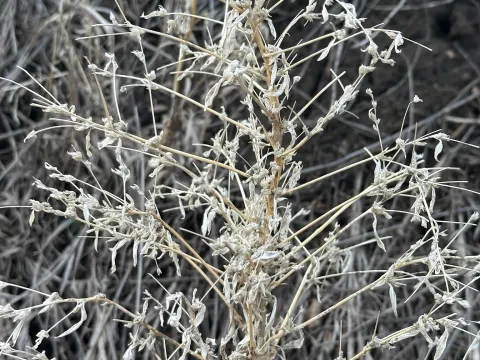
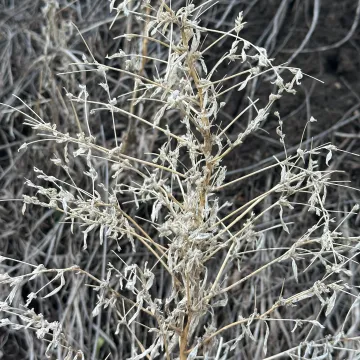
Botanically, Axyris amaranthoides is characterized by a branched, erect stem that typically ranges from 20 to 80 cm in height. Its leaves are simple and lanceolate, often with a grayish-green tint. The small, inconspicuous flowers are gathered in dense, spike-like terminal inflorescences. The plant possesses a robust taproot system that enables it to survive periods of intense drought, making it difficult to eradicate once established.
Successful management of Russian pigweed requires an integrated approach. Standard agronomic practices such as deep tillage, effective crop rotation, and precise timing of chemical weed control are essential. Because the weed produces a vast amount of seeds that can persist in the soil seed bank for several years, control measures must be consistently applied to prevent seed bank replenishment.
From an agricultural standpoint, Russian pigweed is considered a detrimental competitor. It interferes with the healthy growth of various crops and requires significant resources for mitigation. Key economic and ecological impacts include:
- Reduction of total crop yield due to resource competition.
- Increased costs associated with cleaning contaminated grain harvests.
- Serving as a host for common agricultural pests and soil-borne diseases that can spread to cultivated fields.
Photo gallery