Baccharis coridifolia
Baccharis coridifolia
Description
Baccharis coridifolia is a perennial subshrub belonging to the Asteraceae family. Within agricultural settings, this species is widely recognized as a harmful and toxic weed. It is not considered a cultivated crop; instead, it is a significant concern for farmers and cattle ranchers, particularly in its native regions of South America.
The plant is native to the temperate and subtropical regions of South America, primarily inhabiting Argentina, Brazil, Paraguay, and Uruguay. It thrives in open, sunny environments such as pastures, roadsides, and disturbed soils. Its high adaptability allows it to colonize agricultural land effectively, where it competes with forage crops and limits the utility of grazing grounds.
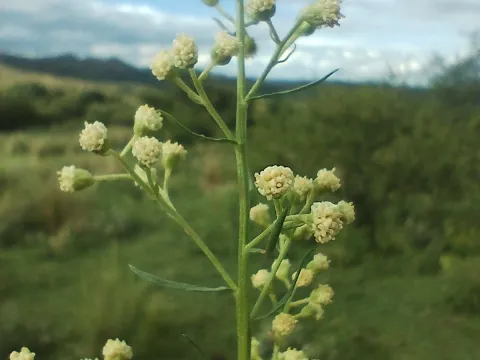
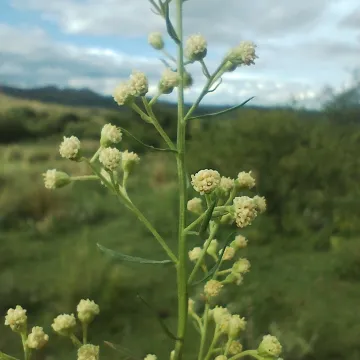
Botanically, Baccharis coridifolia features erect stems that can reach up to one meter in height, characterized by dense, linear leaves that resemble heather. The inflorescences consist of small flower heads. The plant reproduces through prolific seed production, with seeds equipped with pappi that facilitate wind dispersal across vast agricultural landscapes.
The primary concern regarding this plant is its extreme toxicity. It contains macrocyclic trichothecene mycotoxins, which are highly lethal to livestock, especially cattle and sheep. Ingestion of the plant causes severe internal damage, making it a critical threat to pastoral economies. It is vital for land managers to identify and remove the weed promptly.
Agricultural management and control strategies include:
- Application of specialized herbicides during the early vegetative stage.
- Manual removal and destruction of populations before seed maturation.
- Improving pasture management to increase the competitiveness of forage species.
- Implementing strict monitoring to prevent the spread of infestations to healthy fields.
Photo gallery