Baccharis ramulosa
Baccharis ramulosa
Description
Baccharis ramulosa is a perennial evergreen shrub belonging to the diverse Asteraceae family. Known for its remarkable resilience, this species has gained attention in agricultural and environmental management for its ability to thrive in harsh, varying climates and poor soil conditions.
Originating from South America, the plant is well-adapted to subtropical and temperate environments. Its natural habitat includes open grasslands and rugged landscapes, where it acts as a primary stabilizer for the soil, effectively preventing erosion in areas prone to degradation.
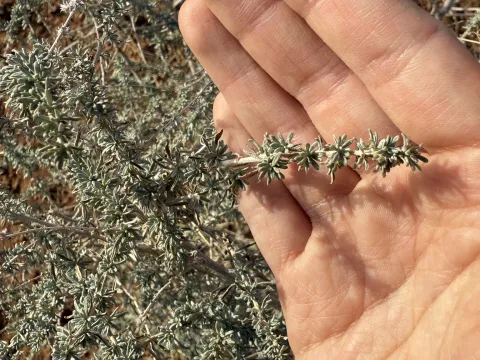
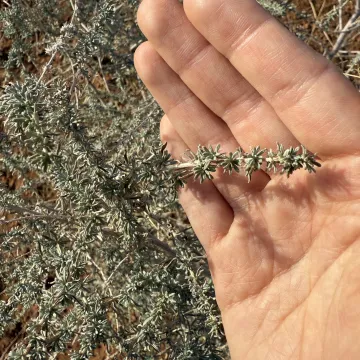
The botanical structure of Baccharis ramulosa is characterized by dense branching and small, durable leaves designed to withstand high solar radiation and low moisture availability. This structural efficiency makes it a low-maintenance choice for large-scale landscaping and land reclamation projects.
Regarding soil and agrotechnology, the plant thrives in well-drained, sandy, or rocky soils with a neutral pH. It requires minimal fertilization and periodic pruning to maintain its health and structural integrity. Farmers are advised to provide full sun exposure to ensure optimal growth and prevent the development of common fungal issues caused by stagnant humidity.
- Requires minimal irrigation once established.
- Excellent candidate for xeriscaping projects.
- Resistant to most common local garden pests.
- Can be propagated via stem cuttings.
In terms of хозяйственное (economic) use, Baccharis ramulosa serves primarily as an ornamental plant and a utility species for creating natural windbreaks. Furthermore, its potential in ecological restoration is significant, as the plant quickly colonizes and stabilizes disturbed soils, supporting the health of the local ecosystem.
Photo gallery