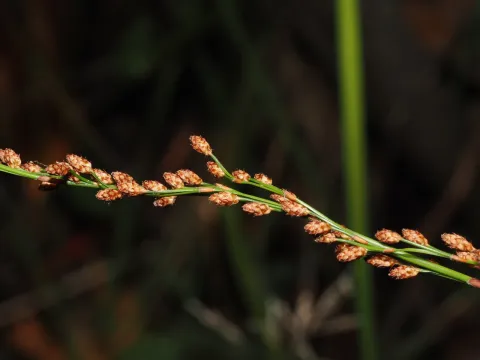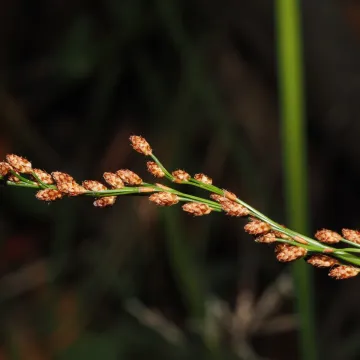
Baloskion tetraphyllum
Baloskion tetraphyllum (Labill.) B. G. Briggs & L. A. S. Johnson
Description
Baloskion tetraphyllum is a perennial herb belonging to the Restionaceae family, commonly found in the native landscapes of Australia. While it resembles typical grasses or sedges to the casual observer, it represents a specialized evolutionary group of plants adapted to nutrient-poor and moist soils.
The plant originates from the southern regions of Australia and has spread to horticultural markets worldwide due to its architectural form. Its cultivation is primarily concentrated in areas with temperate or subtropical climates where the risk of deep, sustained frost is minimal, as the plant prefers stable thermal conditions for its growth cycle.
Botanically, it is characterized by rigid, jointed stems that perform the primary photosynthetic function, as true leaves are reduced to protective sheaths. The plant grows in dense clumps or tussocks, which provide excellent soil stabilization. Its root system is fibrous and deep, allowing the plant to survive in periodically saturated or waterlogged environments.
Agronomic requirements for successful growth include acidic, well-draining soils with high organic matter content. Maintenance practices involve consistent irrigation during the establishment phase and protection from prolonged heatwaves. Regular monitoring for soil pH is essential, as the plant is sensitive to alkalinity, which can cause severe nutrient deficiencies in the stems.
- Requires acidic soil conditions (pH 5.0–6.5)
- High humidity is preferred for optimal growth
- Division of clumps is the primary method of propagation
- Minimal fertilization needed if organic substrate is rich
In terms of usage, the plant is highly valued for ornamental gardening, modern floral design, and erosion control in wet soil zones. Pathogens like root rot are the most common risks, usually triggered by poor drainage. Proper site selection and avoiding overcrowding are the primary measures against typical pests and fungal diseases in commercial cultivation.
Photo gallery