American yellowrocket
Barbarea orthoceras
Description
American yellowrocket (Barbarea orthoceras) is a biennial or perennial herbaceous plant belonging to the Brassicaceae family. It is recognized in agricultural circles for its resilience and ability to provide early-season biomass in challenging, cold-climate environments.
The native range of this species extends across the northern regions of the Northern Hemisphere, including North America and parts of Eurasia. Because of its evolutionary background, the plant is naturally adapted to arctic and subarctic climates, making it a reliable choice for agriculture in northern latitudes where growing seasons are short.
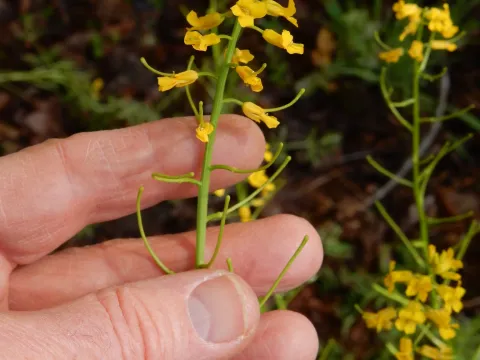
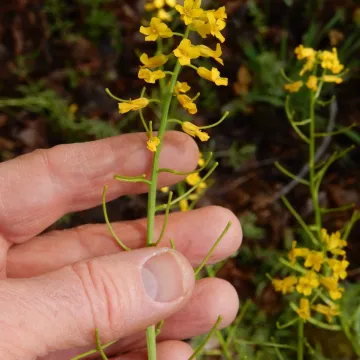
Botanically, it features a sturdy, upright stem and distinctively lobed basal leaves. The plant develops a robust root system, allowing it to withstand frost and establish itself quickly when temperatures rise. Its yellow inflorescences are typical for the mustard family and contribute to a rapid reproductive cycle, which is essential for seed production in harsh environments.
Agricultural requirements focus on well-drained, moist soils that are rich in organic matter. While it is hardy, the crop performs best when competition from weeds is minimized during the establishment phase. Proper irrigation management is vital during the germination period to ensure uniform stand density and optimize yield potential.
The primary agricultural use is as an early-season forage crop, providing nutritious green feed for livestock before other grasses have fully matured. Regarding protection, producers must monitor for common brassica pests, such as flea beetles. Implementing a diverse crop rotation is recommended to mitigate the risk of soil-borne pathogens and ensure long-term soil health.
Photo gallery