Bassia echinopsila
Bassia echinopsila
Description
Bassia echinopsila is an annual herbaceous plant belonging to the Amaranthaceae family. Known for its remarkable resilience, this species has evolved to thrive in harsh, saline, and arid environments where many other plants fail to survive. It is recognized for its adaptability to changing soil conditions and its presence in various steppe and desert ecosystems.
The origin of Bassia echinopsila traces back to the dry regions of Eurasia, specifically throughout Central Asia and parts of the Caucasus. Its current distribution is quite broad, as it frequently acts as a ruderal species, populating abandoned agricultural fields, roadsides, and desert margins. The plant's ability to propagate in neglected areas makes it a common sight in anthropogenic landscapes.
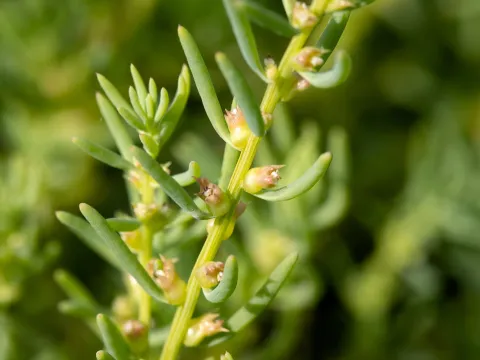
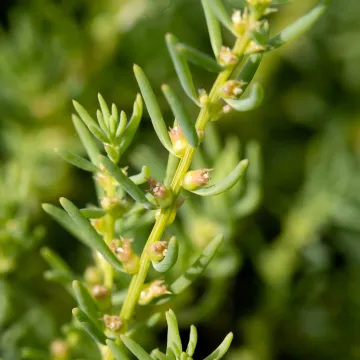
Botanically, the plant develops a heavily branched stem that can reach significant heights under favorable conditions. Its leaves are generally linear and covered with fine hairs, an anatomical adaptation designed to reduce water loss through transpiration. The small flowers are grouped in spike-like inflorescences, where the bracts possess distinctive spine-like appendages, which is the key diagnostic feature for the species.
In terms of ecological requirements, the plant prefers sandy or loamy soils and exhibits a high tolerance for salinity, classifying it as a halophyte. It requires full sunlight to complete its lifecycle and is highly drought-resistant. Conversely, it does not compete well in environments with high vegetation density or excessive soil moisture, which limits its ability to invade well-managed commercial crop fields.
From an agricultural standpoint, Bassia echinopsila is primarily viewed as a weed rather than a crop. While its nutritional value for livestock is limited, it is occasionally grazed in extreme desert conditions. Effective weed management involves preventative measures such as soil tilling and crop rotation, which disrupt the plant's growth cycle before it can effectively set seed in the field. Few pests or diseases are known to pose a serious threat to the vitality of this species due to its specialized survival mechanisms.
Photo gallery