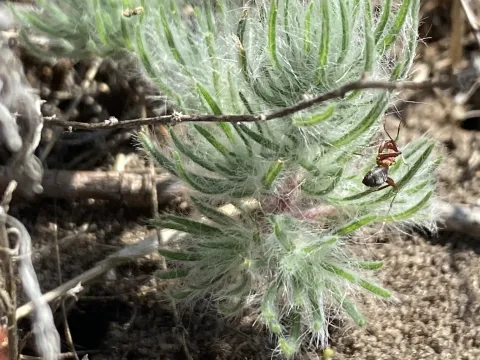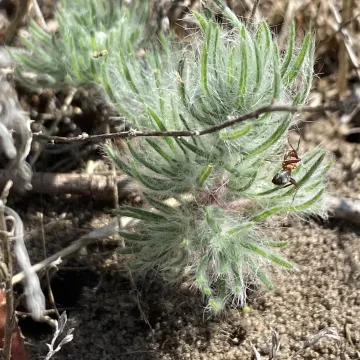
Bassia laniflora
Bassia laniflora
Description
Bassia laniflora is an annual herbaceous plant belonging to the Amaranthaceae family. It is a highly specialized species adapted to extreme environmental conditions, often thriving in habitats where conventional agricultural crops cannot survive due to water scarcity or high soil salinity.
The plant originates from the arid regions of Eurasia. Its natural range encompasses vast areas of deserts, semi-deserts, and saline landscapes. Through evolution, the species has developed specific mechanisms to tolerate the harsh environmental pressures typical of these regions, making it a key element of the desert and steppe ecosystems.
Botanically, Bassia laniflora is distinguished by its branched stem covered with dense hairs that minimize water loss through transpiration. The plant possesses a robust taproot system that reaches deep into the soil to access groundwater, ensuring survival during prolonged droughts and extreme heat waves.
Agronomic requirements for this crop are relatively low, as it prefers sandy, loose, and often saline soils. It does not require complex fertilization programs or irrigation, making it an excellent candidate for low-input farming systems aimed at regenerating degraded soils. Its ability to propagate naturally from seeds ensures the longevity of the plant population in its habitat.
- Extreme drought and salinity tolerance
- Effective soil stabilization of moving sands
- Low requirement for agricultural inputs
- Nutritional value for camels and sheep
The primary agricultural use of Bassia laniflora lies in land reclamation and the improvement of pasture productivity in arid zones. By stabilizing loose sand dunes, it prevents wind erosion while simultaneously providing a source of forage for livestock, which is essential for sustainable agriculture in environmentally challenging climates.
Photo gallery