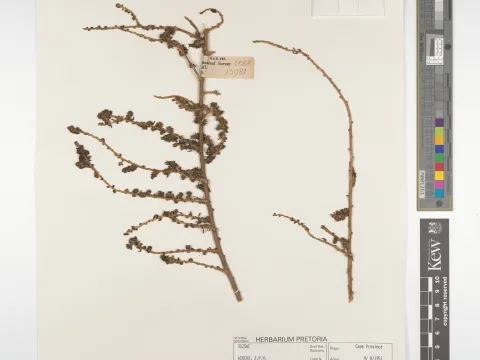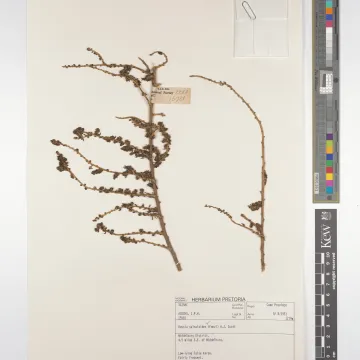
Bassia salsoloides
Bassia salsoloides
Description
Bassia salsoloides is an annual herbaceous plant belonging to the Amaranthaceae family. As a highly specialized halophyte, it is biologically adapted to thrive in saline environments, such as salt marshes and alkaline semi-desert regions. Its ability to thrive in challenging soil conditions makes it a subject of interest for sustainable agriculture in arid climates.
The plant originates from the arid and semi-arid zones of Eurasia, where it is often found in naturally saline landscapes. Over generations, it has developed unique physiological mechanisms to regulate salt accumulation in its tissues, allowing it to maintain metabolic functions where other crops would fail. Its geographical distribution typically follows the margins of deserts and steppe regions.
Botanically, Bassia salsoloides displays a robust growth habit with succulent-like, linear leaves that help conserve moisture. The plant features a deep taproot system, which is crucial for nutrient and moisture uptake in poor, saline soils. It flowers during the heat of the season, producing small seeds that are resilient to drought and are easily dispersed by wind and grazing animals.
The agronomic requirements for this species are minimal, making it an ideal candidate for low-input farming systems. It does not require fertilizers or irrigation; in fact, it thrives in environments that are considered detrimental to traditional crops. Proper management involves minimal soil disturbance and ensuring that seedlings are not overshadowed by aggressive invasive weeds during their establishment phase.
The primary agricultural applications include:
- Phytoremediation of salt-affected or degraded lands.
- Providing reliable forage for camels, sheep, and goats in harsh environments.
- Prevention of wind erosion in sandy and saline areas.
- Contribution to biodiversity in disturbed arid ecosystems.
In terms of plant health, the species is remarkably resistant to typical agricultural pests and pathogens due to its physiological adaptation to saline conditions. While it is rarely affected by insects, fungal infections can occasionally occur in low-lying, waterlogged areas. As such, maintaining proper soil drainage—even in saline sites—is the best preventative measure to keep the crop healthy and productive.
Photo gallery