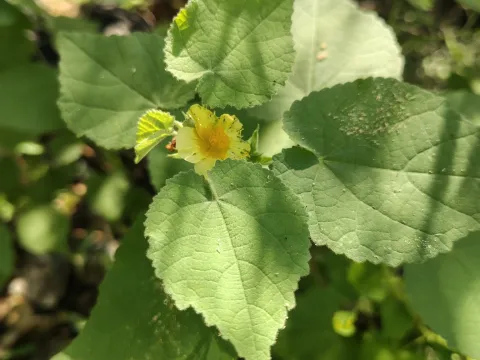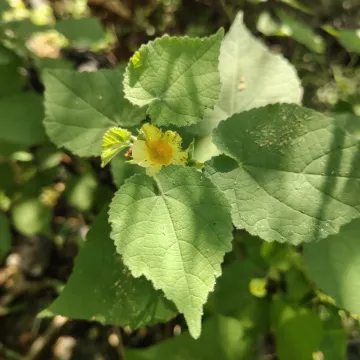
Bastardia bivalvis
Bastardia bivalvis
Description
Bastardia bivalvis is a herbaceous plant or subshrub belonging to the diverse and economically important Malvaceae family. This species is often studied by botanists and agronomists due to its adaptive strategies in tropical ecosystems and its morphological similarities to other fiber-producing plants within the mallow family.
The plant is native to the tropical regions of the Americas, specifically inhabiting areas across Central and South America and the Caribbean islands. It thrives in warm, humid climates and is frequently found in disturbed soils, along roadsides, and in secondary forests, showcasing a robust ability to colonize and survive in varying environmental conditions.
Botanically, Bastardia bivalvis is characterized by an erect, branched stem and heart-shaped, serrated leaves. The flowers are typically yellow, featuring the classic five-petaled structure common to the Malvaceae family. The fruit is a capsule that splits into two segments at maturity, a distinctive feature that defines the plant's scientific name and sets it apart from related genera.
Cultivation requirements involve high temperatures and a well-drained soil structure to prevent root rot. While not widely cultivated on an industrial scale, experiments suggest that the plant responds well to moderate irrigation and consistent sunlight. Standard agronomic practices, including soil aeration and weed control, are essential during the initial growth stages to ensure a healthy establishment.
Potential agricultural and commercial uses for this crop include:
- The extraction of bast fibers for use in cordage or coarse textile production.
- Utilization in research as a genetic resource for improving related industrial crops.
- Application in local herbal practices within its native geographical range.
Like many plants in the mallow family, this species is susceptible to diseases such as powdery mildew and various leaf rusts, especially in high-humidity environments. Common pests include spider mites and specific types of beetles that feed on foliage. Integrated pest management strategies, focusing on biological controls and proper site selection, remain the most effective methods for maintaining plant health.
Photo gallery