Stinking hellebore
Helleborus foetidus L.
Description
Stinking hellebore (Helleborus foetidus L.) is a robust evergreen perennial plant belonging to the Ranunculaceae family. It derives its common name from the distinctively unpleasant odor released by the foliage when crushed or bruised, a feature that distinguishes it from other species in the genus.
Originating from the mountainous regions of Western and Central Europe, this species is well-adapted to limestone-rich soils and rocky habitats. In agricultural and horticultural contexts, it is highly valued for its winter-blooming habit and its ability to provide structural interest throughout the colder months.
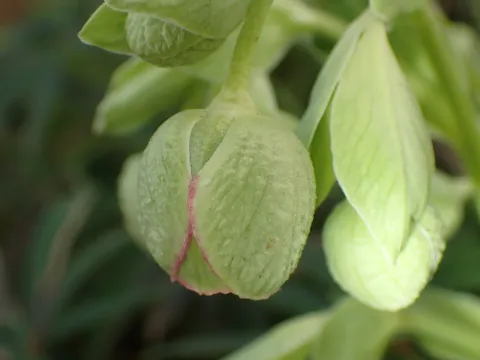
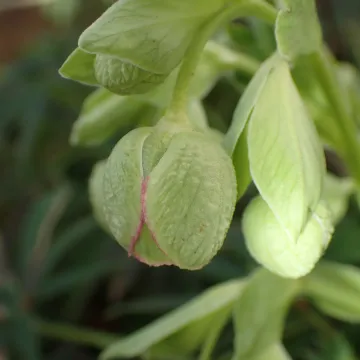
Botanically, the plant features upright, stout stems reaching heights of 50 to 80 centimeters, adorned with deep green, leathery leaves arranged in a palmately divided pattern. The inflorescences consist of clusters of drooping, bell-shaped flowers characterized by a pale green hue and distinct purple margins on the petals.
For successful cultivation, stinking hellebore requires well-drained, fertile soil, ideally with a neutral to alkaline pH level. It performs best in partial shade, although it is surprisingly tolerant of drier conditions and more exposed positions compared to other hellebores once the root system is well-established.
The primary use of this crop is in landscape design, where it serves as an excellent choice for woodland gardens, shady borders, and rockeries. Cultivators should be aware that the plant is toxic if ingested and may cause skin irritation; therefore, protective gloves are recommended during maintenance, such as pruning or transplanting.
- High winter hardiness.
- Early spring flowering season.
- Drought tolerance once established.
- Low maintenance requirements.
Photo gallery