
Description
Kolkwitzia amabilis, commonly known as the beauty bush, is a deciduous ornamental shrub belonging to the Caprifoliaceae family. It is a monotypic genus, meaning it is the sole member of its group, highly valued for its mass flowering display that transforms the landscape in late spring.
Originating from central China, this plant has adapted well to various temperate climates worldwide. It thrives in regions where it can experience distinct seasonal changes, though it prefers protected sites that shield its foliage and developing buds from harsh, desiccating winter winds.
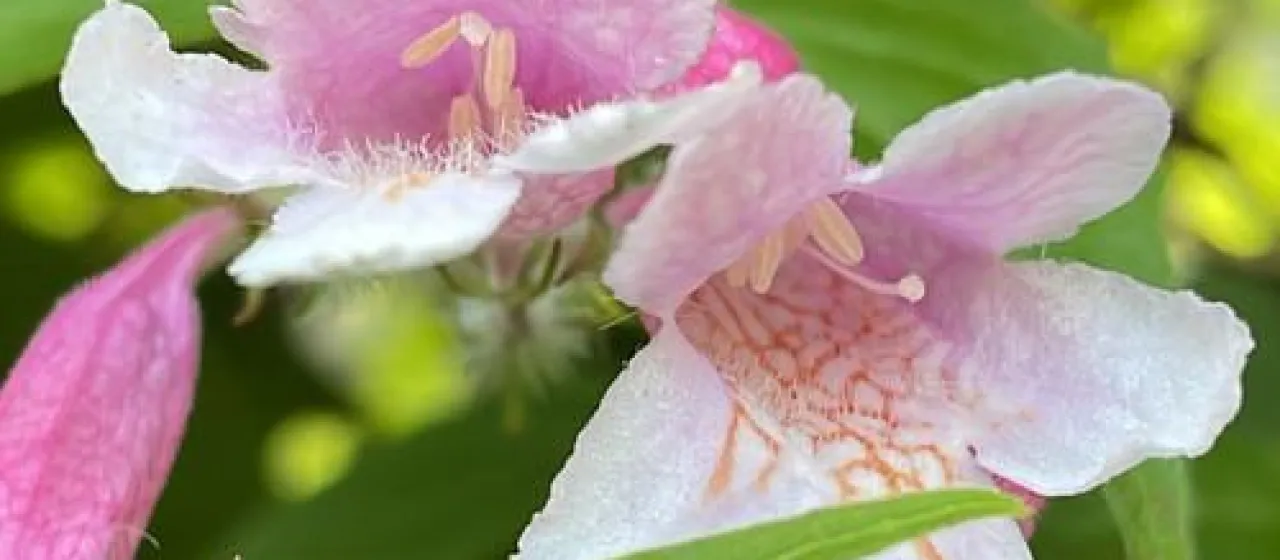
Botanically, it is a sturdy, upright-growing shrub that can reach heights of up to 3 meters. The leaves are ovate and arranged oppositely, providing a lush green backdrop for the trumpet-shaped, pink flowers with yellow throats. These flowers are produced in such abundance that they often obscure the foliage entirely during the peak of the season.
Regarding cultivation, the beauty bush requires full sun to partial shade and fertile, well-draining soil. It is relatively drought-tolerant once established but performs best with regular watering during dry spells. Annual maintenance includes pruning immediately after flowering to encourage new growth and removing old, unproductive wood to maintain the plant's shape.
The primary use of Kolkwitzia amabilis is aesthetic, serving as an ideal specimen plant or foundation shrub in ornamental gardens. While generally robust, it may occasionally face issues with aphids or powdery mildew. Integrated pest management, such as maintaining good airflow through proper spacing and regular pruning, is usually sufficient to keep the plant healthy.