American slough grass
Beckmannia eruciformis (L.) Host
Description
Beckmannia eruciformis, commonly known as American slough grass, is a perennial grass species belonging to the family Poaceae. This plant is recognized in agriculture for its exceptional adaptation to wet, marshy habitats where other conventional forage crops would struggle to thrive, making it an important component of specific agricultural landscapes.
The native range of this species spans temperate regions across Eurasia. It naturally thrives in floodplains, along the banks of water bodies, and in damp meadows that experience seasonal inundation. Because of its ecological resilience, it has been valued by farmers for centuries as a reliable source of forage in challenging, water-logged soils that are otherwise unsuitable for intensive crop cultivation.
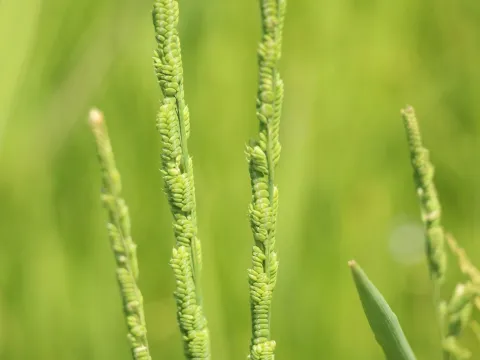
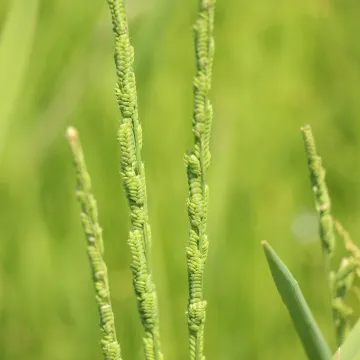
Botanically, the plant grows in loose clusters, reaching heights typically between 50 and 120 centimeters. It is characterized by its distinctive panicle, which appears as a series of short-stalked spikelets arranged in two neat rows. Its robust root system allows it to stabilize soil, while its ability to withstand prolonged submergence sets it apart from many other forage grasses used in mixed pasture systems.
Agronomic requirements for cultivating this species focus primarily on moisture management. It favors heavy, nutrient-rich soils that retain water well. While it requires minimal irrigation in damp climates, successful establishment requires proper seedbed preparation and weed management during the initial growth stages, as it can be relatively slow to establish compared to more aggressive forage grasses.
The primary economic use of this grass is for hay production and grazing. It offers good nutritional value and is highly palatable to livestock, including cattle and horses. Farmers should monitor their fields for common cereal diseases like rust or ergot, particularly in years with high humidity or during seasons of poor air circulation, to maintain both the yield and quality of the forage harvest.
Photo gallery