Fremont's barberry
Berberis fremontii
Description
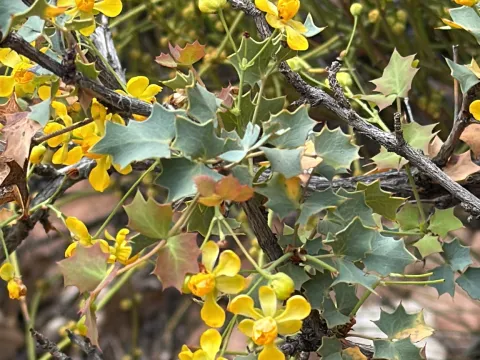
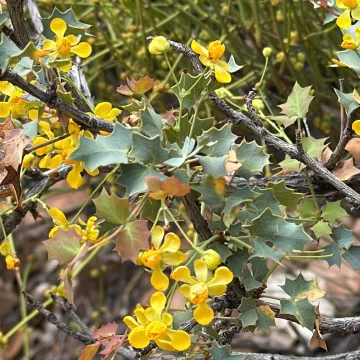
Fremont's barberry (Berberis fremontii) is an evergreen shrub species belonging to the Berberidaceae family. It is a robust, drought-tolerant woody plant, often referred to in botanical circles by its alternative name, Mahonia fremontii, known for its resilience in harsh, semi-arid environments.
The native habitat of this species is found in the southwestern United States and northern Mexico. It typically grows in chaparral, pinyon-juniper woodlands, and rocky slopes. Because of its origin in arid landscapes, the plant has evolved to survive under low moisture conditions and poor soil quality, making it a sustainable choice for certain agricultural zones.
Botanically, the plant is characterized by its stiff, glaucous, spine-tipped leaflets that are pinnately compound. During the spring, it produces clusters of yellow flowers followed by dark blue to black berries. These berries are an important food source for local wildlife and have been used traditionally as a food ingredient by indigenous cultures.
Agricultural management for this species focuses on maintaining adequate drainage, which is crucial for root health. It is a sun-loving plant that does not require significant fertilization or intensive irrigation once established. Pruning should be kept to a minimum, primarily focused on removing dead wood or shaping the shrub for aesthetic purposes in garden settings.
- Extreme tolerance to heat and drought.
- Adaptability to alkaline and rocky soils.
- Low maintenance requirements once the root system is established.
- Significant resistance to common shrub pests and pathogens.
In terms of хозяйственное (economic) utilization, Fremont's barberry is an excellent candidate for xeriscaping and large-scale landscaping where water conservation is prioritized. Furthermore, the plant's fruit, though tart, is increasingly recognized for its culinary applications, and its hardy nature makes it a potential asset for soil conservation projects in arid regions.
Photo gallery