Hakea-leaved barberry
Berberis hakeoides
Description
Berberis hakeoides, commonly known as the Hakea-leaved barberry, is an evergreen shrub belonging to the Berberidaceae family. It is a distinctive ornamental plant appreciated for its unique foliage and structural appearance, which sets it apart from more common barberry varieties found in temperate gardens.
The species originates from South America, specifically native to Chile. Its natural habitat includes coastal and forest margins in temperate zones. In cultivation, it thrives best in environments that mimic its mild, oceanic native climate, as it does not tolerate severe, prolonged frost or extreme drought.
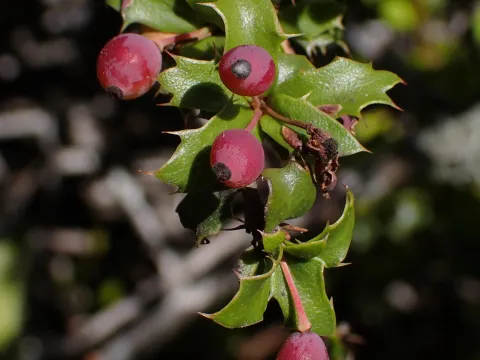
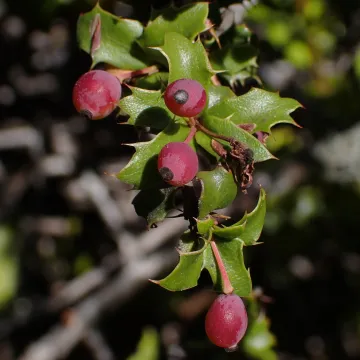
Botanically, this shrub is characterized by its stiff, spiny, and evergreen leaves that resemble the foliage of Hakea species, hence the specific epithet. The plant produces dense clusters of bright yellow flowers in the spring, followed by dark, rounded berries. It is a slow-to-moderate grower with a naturally upright habit.
Regarding agrotechnical requirements, it favors well-drained, fertile soil and requires a location sheltered from cold, drying winds. Soil moisture should be consistently moderate; while the plant is somewhat drought-tolerant once established, young specimens require regular watering during dry spells to ensure root development.
The primary use of Berberis hakeoides is in landscape design, where its dense and thorny structure makes it an excellent choice for security hedges or as a structural specimen in Mediterranean-style gardens. Common pests include aphids and scale insects, while fungal issues like rust can occur in poor ventilation. Regular pruning is recommended to maintain shape and promote airflow, which helps prevent disease.
Photo gallery