Nevin's barberry
Berberis nevinii
Description
Nevin's barberry (Berberis nevinii) is a rare and striking evergreen shrub belonging to the Berberidaceae family. Recognized for its unique, grayish-green foliage and structural integrity, this species is highly valued in horticulture for its resilience and ornamental appeal. As a member of the diverse Berberis genus, it stands out due to its adaptation to arid environments and distinct evergreen nature.
Originating from the chaparral regions of Southern California, Nevin's barberry has a specific natural habitat consisting of dry, rocky slopes and canyons. It is perfectly adapted to the Mediterranean climate, where it thrives under intense sunlight and minimal rainfall. This plant is a critical component of local ecosystems, providing food for wildlife through its seasonal berries and cover through its dense, thorny branches.
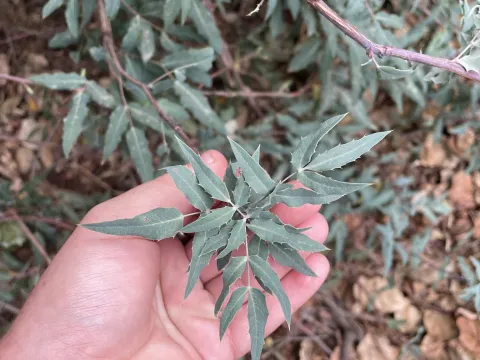
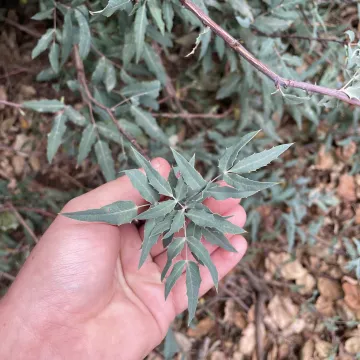
Botanically, the plant features upright, rigid stems that can grow up to 2-3 meters in height. Its leaves are stiff and serrated, equipped with sharp spines that provide natural protection. During the spring, the bush produces clusters of bright yellow flowers, followed by small, blue-glaucous berries that appear in late summer. Its growth habit is slow, making it a low-maintenance choice for areas that require structure without excessive pruning.
Cultural requirements emphasize excellent drainage above all else. To succeed, Nevin's barberry must be planted in well-aerated, slightly alkaline to neutral soil. Once established, it is remarkably drought-tolerant, necessitating only occasional deep watering during the hottest summer months. Excessive water, particularly in heavy clay soils, will almost certainly lead to root rot, which is the primary cause of failure when cultivating this species.
In terms of practical application, this shrub is extensively used for xeriscaping, security hedging, and as a focal point in drought-resistant gardens. While it is generally hardy, it can suffer from typical fungal issues such as rust or powdery mildew if air circulation is inadequate or humidity levels remain high. Regular, careful pruning is recommended to maintain shape and ensure that the interior of the shrub remains healthy and well-ventilated, preventing the buildup of pests like aphids.
Photo gallery