Hoary alyssum
Berteroa incana (L.) DC.
Description
Hoary alyssum (Latin: Berteroa incana) is a biennial herbaceous plant belonging to the Brassicaceae family. While sometimes appreciated for its resilience, it is widely recognized in agriculture as a significant weed that competes with crops, particularly in pastures and forage fields.
Native to Europe and parts of Asia, this plant has spread extensively across North America and other regions. It thrives in nutrient-poor, sandy, or gravelly soils. Its ability to tolerate dry conditions makes it a persistent presence in overgrazed pastures and along transportation corridors, where it can quickly establish dense populations.
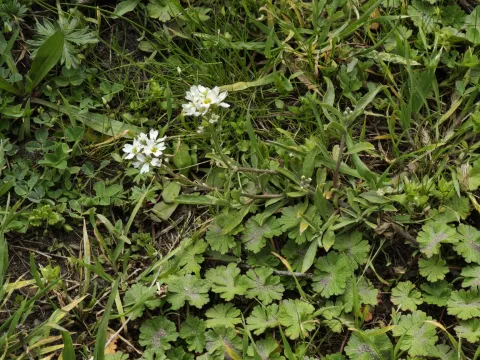
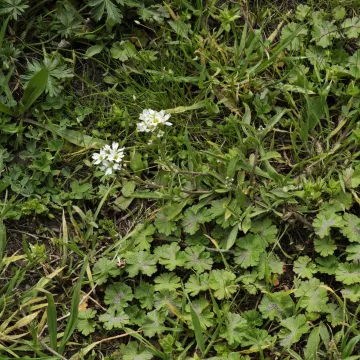
The plant is characterized by its grayish appearance caused by dense, star-shaped hairs covering the leaves and stems. It grows between 20 and 80 cm in height. Its fruit is a distinct, elliptic-shaped silicle (seed pod). The plant reproduces exclusively by seed, producing thousands of seeds per individual, which can remain viable in the soil for several years.
Agricultural management requires integrated strategies. Mechanical control, such as mowing, is effective if done before the plants set seed. However, because they are prolific seed producers, soil disturbance should be minimized. Chemical control using selective herbicides is most effective during the early rosette stage of development.
Regarding its economic impact, Hoary alyssum is considered a toxic plant for horses, potentially causing limb edema, laminitis, and fever when ingested as part of hay. Farmers must be vigilant about its presence in hay fields. Besides its negative impacts, it serves as a late-season nectar source for bees, though its invasive nature generally outweighs this benefit in cultivated landscapes.
Photo gallery